

AGS Is Changing How Medical Bills Are Processed



From boardroom overhaul to AI-powered growth, EQT’s stewardship of AGS Health demonstrates the value of hands-on transformation in one of healthcare admin’s most complex corners.
- AGS was identified as a hidden gem with the potential to accelerate digital transformation among U.S. healthcare providers.
The world was very different back in April 2019 when Baring Private Equity Asia (now part of EQT) acquired the Revenue Cycle Management company, AGS Health. Covid-19 had yet to emerge, and large language model (LLM) artificial intelligence was in its infancy.
It was nonetheless a moment of opportunity, because while a handful of healthcare firms were preparing for an AI-first future, most were happy to keep running outdated systems and manual processes.
If firms like AGS Health didn’t start preparing for AI, competitors with the technology “were going to eat our lunch,” says Kelvin Hew, Managing Director, Operations at EQT Private Capital Asia. It was a decision that would ultimately pay off.
Indeed, private market firms’ interest in healthcare enterprise systems companies such as AGS Health has resulted in more than $89bn in private equity-led acquisitions since 2016, according to PitchBook. Investors have spotted the chance to overhaul legacy companies in an industry with favorable tailwinds drawn from an aging population and ever more complex health needs.
Tapping the vein of healthcare digitization
EQT had seen how streamlining and automating back-end operations could transform businesses in other sectors – such as its ownership and IPO of Telus Digital, a customer experience and digital services firm.
AGS Health was identified as a strong prospect to apply this thesis to healthcare, with Revenue Cycle Management (RCM) – the process healthcare providers use to bill, track, and collect payments from patients and insurers – considered an “especially attractive sub-sector,” according to Janice Leow, EQT Partner and Head of Private Capital in Southeast Asia.
When done well, RCM improvements can potentially both optimize financial performance and improve patient outcomes, making it a particularly strong area for long-term growth.
“We were looking for a company with a very high-quality product,” says Leow. “In healthcare, customers are very risk-averse, but not as price-competitive. So we wanted to find a company with a very good reputation.”
Private equity deals in heathcare enterprise system firms
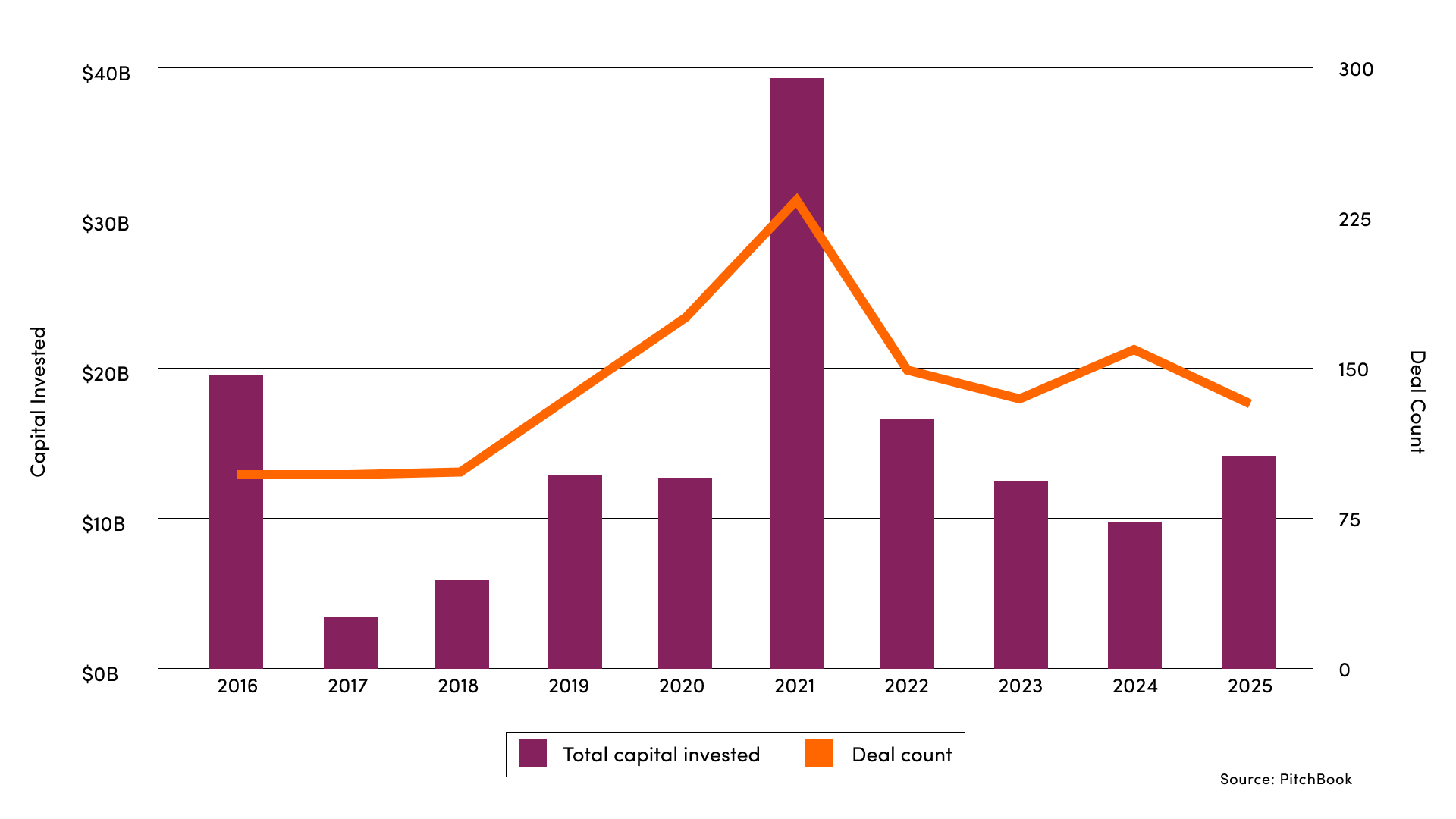
When EQT acquired AGS Health in 2019, it had been founder-led for nearly a decade, bootstrapped after initial seed funding. Founded in 2011 by Devendra Saharia in Chennai, India, in just eight years, the company had grown organically to more than 6,000 staff worldwide.
In that time, it had established itself as a leader in offshore RCM delivery, acting as the link between patients, insurers and healthcare providers. RCM can be an intensely complex area of payments administration and one where accuracy and efficiency in processes are much sought after.
A healthcare industry leader
With many of the founding team leaving alongside Saharia as part of the acquisition, EQT saw that a leadership team of technologists would be needed for the company’s next phase of growth.One of the biggest priorities was strengthening the go-to-market (GTM) function. When EQT came in, AGS’s GTM model was a highly concentrated founder-driven sales effort that relied heavily on Saharia’s network.
EQT helped build an institutional GTM engine from scratch, installing a chief revenue officer, chief marketing officer, and regional coverage leads. This was combined with the appointment of technologist and healthcare innovation specialist Patrice Wolfe as CEO. Applying her 30 years of healthcare industry experience, Wolfe set about defining and executing EQT and AGS’ vision. EQT refers to this as the Full Potential Plan, and it’s used as a yardstick to measure progress throughout its ownership.
That focus on experienced specialists applied to the AGS’s new board, too.
“We ensured that we built a board with talented folks who had already achieved the transformation we wanted to realize for AGS in the past,” says Hew. “That way you've got a board full of individuals who can be thought partners to the CEO and the management team.”
Hunting and farming to grow strategic accounts
This new leadership and commercial infrastructure set AGS up to target larger, more strategic clients. Instead of chasing dozens of small prospects, EQT encouraged the company to go “whale hunting”.
“How do we hunt whales instead of spearing fish?” asks Hew.
That focus paid off. “Over time, our average deal size actually quadrupled. These things really help accelerate that top-line growth,” he says. AGS established relationships with U.S. healthcare giants, including a roster of loyal marquee customers, including Banner Health, Richmond University Medical Center, SCP Health, and Vanderbilt University Medical Center.
At the same time, EQT relocated the company’s headquarters to Washington, D.C., embedding it closer to U.S. healthcare systems.
“The healthcare providers who are outsourcing RCM for the first time have initial fears that the required level of service can’t be delivered,” says Hew. So, to build trust, AGS expanded its U.S. delivery locations. Then, once clients were comfortable with onshore, the service moved nearshore, and finally offshore to India and the Philippines once AGS had established a strong relationship.
Upgrading the tech stack
“I'll be honest, when it started, AI was a little bit more of a defensive move,” explains Hew. That’s a reference to the 2021 acquisition of medical coding technology provider EZDI.
The idea was to revigorate AGS’s own tech stack. It turned out to be a well-timed move “because EZDI productized LLM technology sooner than other competitors,” says Leow. AGS was able to feel the benefits of AI sooner.
“It makes a big difference if you already own the workflows and you can layer AI on top,” she adds. EQT's digital team validated the technical direction mid-investment, and it was clear that the talent they had brought in was already taking AGS in the right direction.
EQT’s exit
By the time EQT sold AGS to a global financial sponsor in 2025 for $1.4bn, the firm had been transformed. What began as a founder-led, single-product outsourcing provider had become a global, professionally managed, technology-enabled enterprise delivering an organic revenue compound annual growth rate of over 20 percent. Strategic investments in AI and U.S. market presence propelled AGS to unicorn status.
This growth meant the business exited with “Rule of 60” metrics – the sum of revenue percentage point growth rate and EBITDA margin – significantly exceeding the SaaS “Rule of 40” financial health benchmark, which is considered industry-standard.
But for Leow, the most satisfying part wasn't the numbers, but the legacy: “We were proud that the company kept beating its budgets even after we’d agreed the sale.”

ThinQ by EQT: A publication where private markets meet open minds. Join the conversation – [email protected]
MoreInsights







Exclusive News and Insights Every Month
Sign up to subscribe to the EQT newsletter.