

The Exploration Company’s Race to Build Europe’s Answer to SpaceX

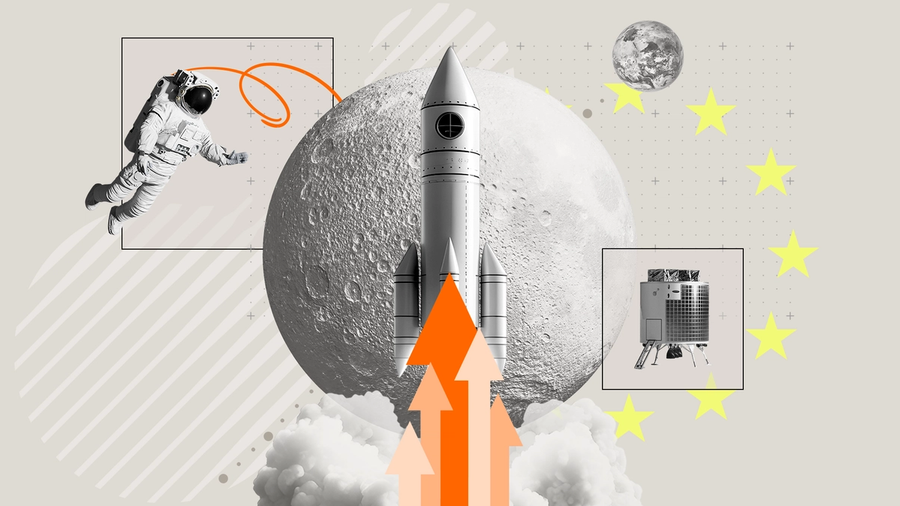

The Exploration Company borrows the speedy approach and commercial focus from SpaceX, but co-founder Hélène Huby says its culture will always be European.
- Space startup wants to build the continent’s first private astronaut-ready space capsule.
Only three powers can independently launch astronauts into space: the U.S., China and Russia. Despite its €20tn economy, highly advanced aerospace industry and decades of experience in space exploration, Europe remains absent from this list.
Hélène Huby decided to do something about it. In 2021, she left her executive role at Airbus to found The Exploration Company along with three colleagues, who together bet €50,000 of their savings on a mission to secure European sovereignty in space.
Since its launch more than four years ago, The Exploration Company has achieved what many thought impossible. Starting with a small team that had worked on some of the most complex European space programs, the company has grown to more than 400 staff and built its experimental space capsules at what it says is unprecedented speed.
The Exploration Company must hit a series of ambitious targets to help Europe become more self-reliant, starting with the development of a capsule that can carry cargo – and then astronauts – to the International Space Station. Those lucrative contracts are currently dominated by U.S. companies. That would establish its technical credibility and fund other missions, allowing Europe to compete more directly with the U.S. and China.
“We are paying half a billion euros every year to non-EU actors to fly our astronauts,” Huby says. “I think we can do better.”
The opportunity could be enormous. The space economy, already roughly the size of the semiconductor market, is forecast to grow to $1.8tn by 2035, McKinsey says. The Space Foundation, a nonprofit, estimates that the pace of launches is at record levels and that the commercial sector is growing faster than government-led programs, with fast-rising demand for satellite deployments, servicing and replacement from private companies.
Mission possible
Any nation or group of nations that wants a sizable slice of this market must have greater independence in space technology, Huby says. Europe must strive to become a “global leader” and catch up with SpaceX in the medium term, she says.
“The speed of the market today is basically determined by SpaceX,” she says.
Huby’s company raised more than $230m from investors, including EQT Ventures, the most ever by a European space tech startup. Mission Bikini, its first test capsule, flew after only nine months of development, at a cost of less than €2m. A larger version named Mission Possible launched in under three years for €25m.
“They’re building critical space infrastructure for the next decade,” says Ted Persson, a partner at EQT Ventures. “This isn’t science fiction, it’s industrial execution at scale. Europe has a rare opportunity to lead.”
Huby’s startup is now preparing for its most ambitious move yet. Nyx, the full-size capsule designed to transport cargo to the space station is expected to fly in 2028. If successful, the company aims to build its own reusable rocket engine and eventually support crewed missions beyond low-Earth orbit, including to the moon. The company has the potential to become “a European SpaceX that operates with a different mindset,” as one European official told the Financial Times.
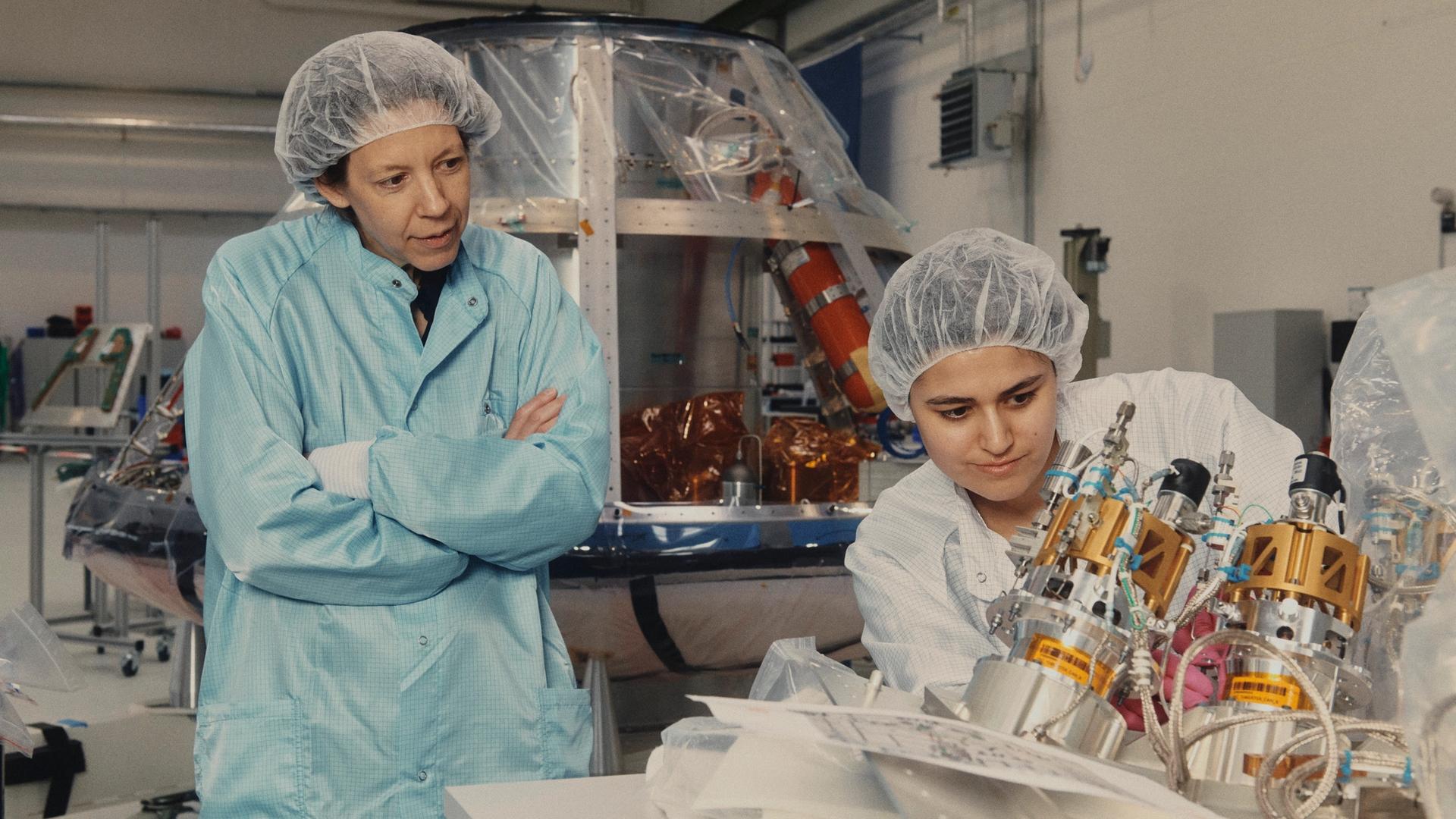
That mindset includes taking a different path from SpaceX and its outspoken CEO, Elon Musk, Huby says. Where SpaceX aims to colonize Mars, her company aims to “build peace in space” through international collaboration. “This is the special card of Europe,” she said at a recent conference. “We’re scaling this European mindset worldwide.”
Space power
The urgency behind her mission extends beyond economics and politics. Without its own capability, Europe is entirely dependent on others. “If Europe has its own capsule,” she says, the U.S. can’t say, “‘Oh, we don’t want you to launch anymore, we don’t like you.’”
European politicians are increasingly on board. “Europe must become a space power once again,” French President Emmanuel Macron said in June 2025, calling for more investment to take on the U.S. and China.
“We can just build the technology here in Europe, create jobs and fly our astronauts ourselves,” Huby says. “It’s going to save us money.”
The Exploration Company is funding this growth by upending the traditional European approach. For the past 40 years, European space development has typically moved slowly, with political discussions resulting in contracts with large aerospace companies. Huby instead raised private capital from investors, including EQT Ventures, and relied on her experienced team and early technical milestones to demonstrate credibility. The company quickly won a €25m ESA competition alongside Thales Alenia Space, the established aerospace giant, to advance its Nyx capsule.
Regulatory obstacles
This is where the structural challenges facing European deep tech come into play. Despite The Exploration Company’s success in raising capital and 95 percent of its investors being based in Europe, Huby says regulatory barriers preventing Europe’s investment community from allocating capital to high-risk ventures might limit growth.
“The biggest problem is a regulation problem,” Huby says, noting that EQT and other firms are pushing for reform. Until that changes, European companies face a difficult choice of either accepting American capital with its strategic implications or constraining their growth to match available European funding, she says.
For The Exploration Company, EQT’s support has helped attract other investors and customers, opening doors across European governments and providing access to former founders who understand the challenges of scaling hardware companies, Huby says.
Consistent investment in riskier categories such as space will eventually create an environment in Europe where there are more funds willing to commit capital to projects run by entrepreneurs, paving the way for a more competitive regional economy, she says.
The Exploration Company’s work on the Nyx capsule and its development of a reusable rocket engine will show whether Europe can build competitive deep-tech champions. From €50,000 to a company preparing to fly cargo to the space station – and hopefully one day go to the moon – Huby’s venture is a test case for whether Europe will join the exclusive club of powers with independent space capability or remain a customer.

ThinQ by EQT: A publication where private markets meet open minds. Join the conversation – [email protected]
On the topic ofCase Studies





Exclusive News and Insights Every Month
Sign up to subscribe to the EQT newsletter.