

Marvel Fusion’s Bid to Make Breakthrough Science a Commercial Reality
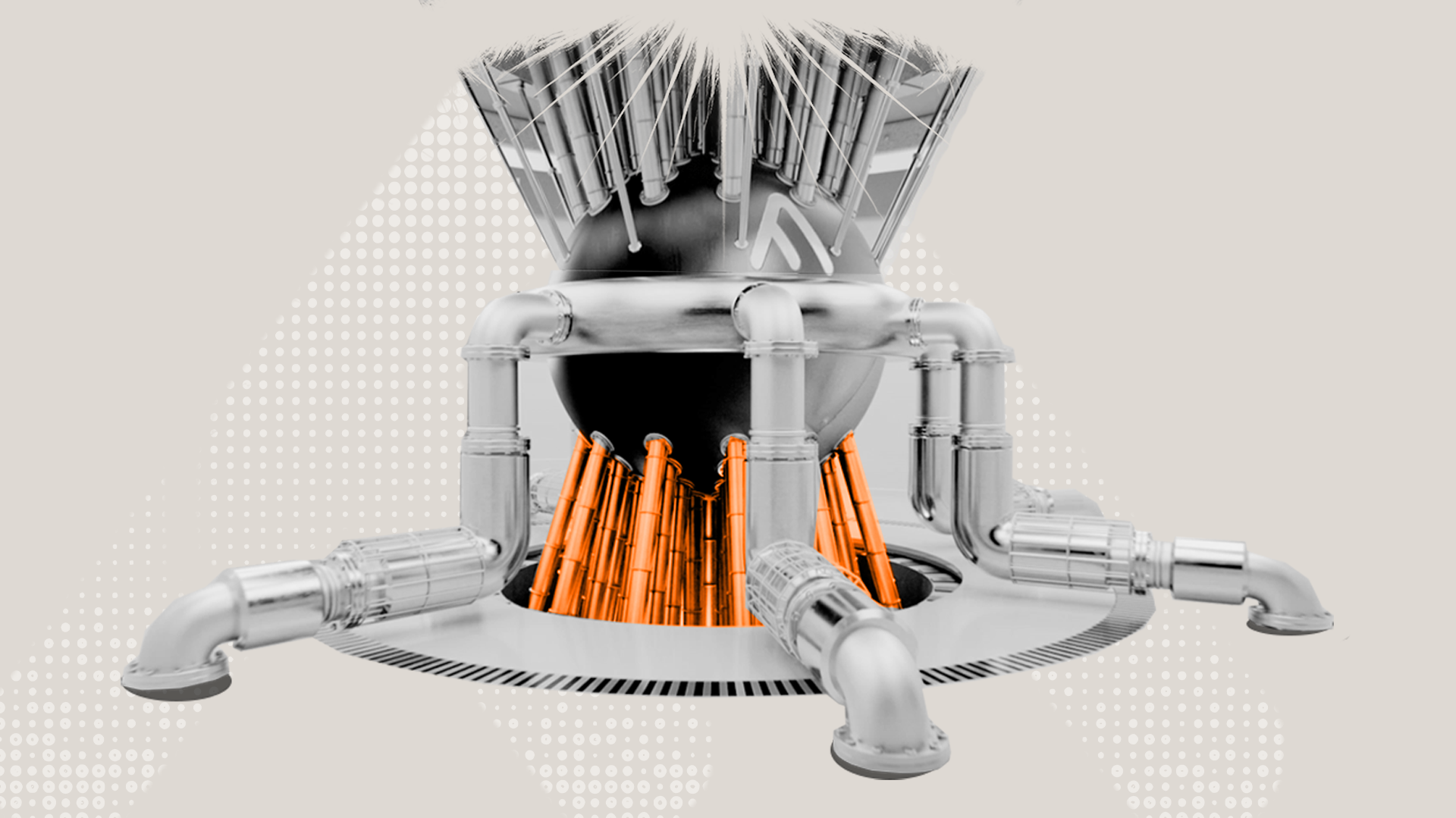

Backed by EQT Ventures, German startup Marvel Fusion is racing to build a commercially viable fusion power plant. The effort is critical for Europe as the region tries to keep pace with the U.S. and China.
- Marvel Fusion is seeking to validate technological concepts and prove fusion energy’s commercial viability.
In 2022, U.S. scientists at the Lawrence Livermore National Laboratory made history in the quest to unlock a near-limitless, carbon-free energy source. For the first time, they achieved a fusion reaction that produced more power than was used to ignite it. But the breakthrough also highlighted the obstacles that countries face in developing commercially-viable fusion power plants.
The $4bn laser complex in California fires about one experimental shot per day at an estimated cost of $1m, operating with very low efficiency rates and ultimately consuming far more electricity than it produces.
“It’s one thing to make a fusion reactor that works, and it’s another thing to make a fusion reactor that’s economic,” says Juan Matthews, a nuclear expert and visiting professor at the University of Manchester.
In the foothills of the Rocky Mountains, German deep-tech company Marvel Fusion and Colorado State University are teaming up to tackle fusion power’s remaining challenges and deliver technology that could one day help transform the global economy.
A facility on the university’s campus, set to open in early 2027, will house powerful laser systems designed to rapidly heat and compress fuel targets developed by Marvel Fusion. Targeting up to 10 shots per second, the site will serve as a testbed to validate the technology. The lasers will ignite Marvel Fusion’s fuel targets, reaching temperatures hotter than the sun. For the Munich-based company, the project is at the heart of an effort to prove that fusion energy can be commercially competitive.
Huge stakes
Fusion, the reaction that powers the sun and the stars, involves smashing hydrogen atoms together at extreme temperatures to release enormous amounts of energy. On a commercial scale, it could reshape global energy markets, displacing fossil fuels and helping to drive the AI boom, while also disrupting the geopolitical balance of power. Fusion promises to provide a carbon-free source of energy, without creating the long-lived radioactive waste that comes from nuclear fission.
Philanthropist Bill Gates says it’s hard to overstate its significance. The availability and affordability of electricity are “huge limiting factors for virtually every sector of the economy today. Removing those limits could be as transformative as the invention of the steam engine before the Industrial Revolution,” he wrote in an October essay.
If successful, Marvel Fusion’s technology also has the potential to help Europe compete with the U.S. and China in the high-stakes fusion power race. The German company, backed by EQT Ventures, says it’s reimagining every key component of laser-driven fusion with the ambition of deploying fusion power plants by the mid-2030s.
“We are not the next scientific institution that is trying to innovate around small things,” says Dr. Nicolas Burkardt, Marvel Fusion’s chief financial officer. “We are proposing critical innovations to move this out of a science-scale experiment toward a commercially competitive power plant configuration.”
Overcoming barriers
With the Colorado site and smaller projects in Germany, Marvel Fusion seeks to develop lasers far more efficient than those used by Lawrence Livermore’s National Ignition Facility (NIF), while slashing the amount of energy that is wasted in triggering fusion.
“[NIF is] using a laser system which is about the size of a shopping mall, in order to crush the tiny little gold-plated capsule, which sits on top of a needle, which contains the nuclear fuel,” says Matthews, the Manchester professor. “That’s quite complicated.”
The company, led by CEO and co-founder Moritz von der Linden, is also aiming to develop much simpler and cheaper fuel targets that could be produced at scale. That’s crucial, considering its lasers would need to shoot about 800,000 targets a day to produce enough energy to power homes, Burkardt says.
The company must overcome huge technical hurdles to achieve a steady and affordable source of energy. The financial obstacles are equally daunting.
Financing gap
Marvel Fusion, which recently added Chief Science Officer Dr. Hartmut Ruhl and Executive Vice President Puja Gupta to its leadership team, is backed by about $400m in public and private funding, making it one of the world’s best-funded laser fusion companies. Burkardt estimates that developing the laser system will cost $1.4bn, with a full prototype plant bringing spending to roughly $2bn. The next phase of the strategy will need larger rounds of investment, potentially $600m to $800m, he says.
“Marvel Fusion stands out for its ambition to rethink the entire system, from lasers to fuel, with a clear path toward scalability,” says Ted Persson, a partner at EQT Ventures. “This is exactly the kind of deep-tech company Europe needs to back if it wants to remain competitive in frontier technologies.”
Europe has the research ecosystem to compete. However, a financing gap hinders the region’s competitiveness in fusion and deep-tech more broadly. Europe produces world-class scientific research, though it often struggles to commercialize it. U.S. and Canadian funds routinely deploy huge sums into promising technologies, giving their companies an advantage in the quest to build billion-dollar plants.
“We need that mindset in Europe,” Burkardt says.
Reaping the rewards
If the region fails to finance promising companies through the hardest stages, the technological advances and economic gains they generate are likely to take root elsewhere. In July, the Chinese government and private investors committed $2.1bn to a new state-owned fusion company, while U.S. startups are advancing quickly with government support in the hopes of connecting pilot plants to the grid next decade.
Europe, meanwhile, is trying to keep pace. Germany has introduced a strategy to accelerate the development of nuclear fusion technology and announced an ambition to build the world’s first fusion reactor, allocating €1.7bn in funding for the project.
“With fusion, Europe has a chance to dominate a new, civilization-scale technology that could be commercialized in the coming five to 10 years,” Marvel Fusion’s CFO says.
The partnership between Colorado State University and Marvel Fusion illustrates the international collaboration required to pull off something as elusive as fusion power. Although Europe has long been a leader in breakthrough science, often in collaboration with partners abroad, turning that innovation into commercial gains at home has proved more difficult. The lasers expected to come online soon in Colorado will help determine if fusion can work beyond the lab and whether Europe can reap the rewards.

ThinQ by EQT: A publication where private markets meet open minds. Join the conversation – [email protected]
On the topic ofCase Studies






Exclusive News and Insights Every Month
Sign up to subscribe to the EQT newsletter.