

Hari Gopalakrishnan: The Trends Driving The Most Exciting Asian Investment Opportunities


To mark the close of BPEA IX, EQT’s Hari Gopalakrishnan gives his take on the most exciting Asian investment opportunities.
I always like to talk about the “spring that never came.” When I was younger, I was studying to be a doctor in India, where I was born and raised. Many of my friends were headed to the U.S. for residency programs, but I wanted to take a chance on business school at home. I didn’t think I’d get in, so I told them, “Why don’t you go this fall? When I lose out, I’ll join you there next spring.”
That time never came, but India’s – and all of Asia’s – has.
In the years since I went to business school in the early 2000s (yes, I got in), India’s annual economic output has grown from about $470bn to over $4tn, and it’s only going to keep growing. It’s not just India. Asian GDP growth is again set to outpace global expansion this year, increasing by 3.9 percent against the world’s 2.8 percent.
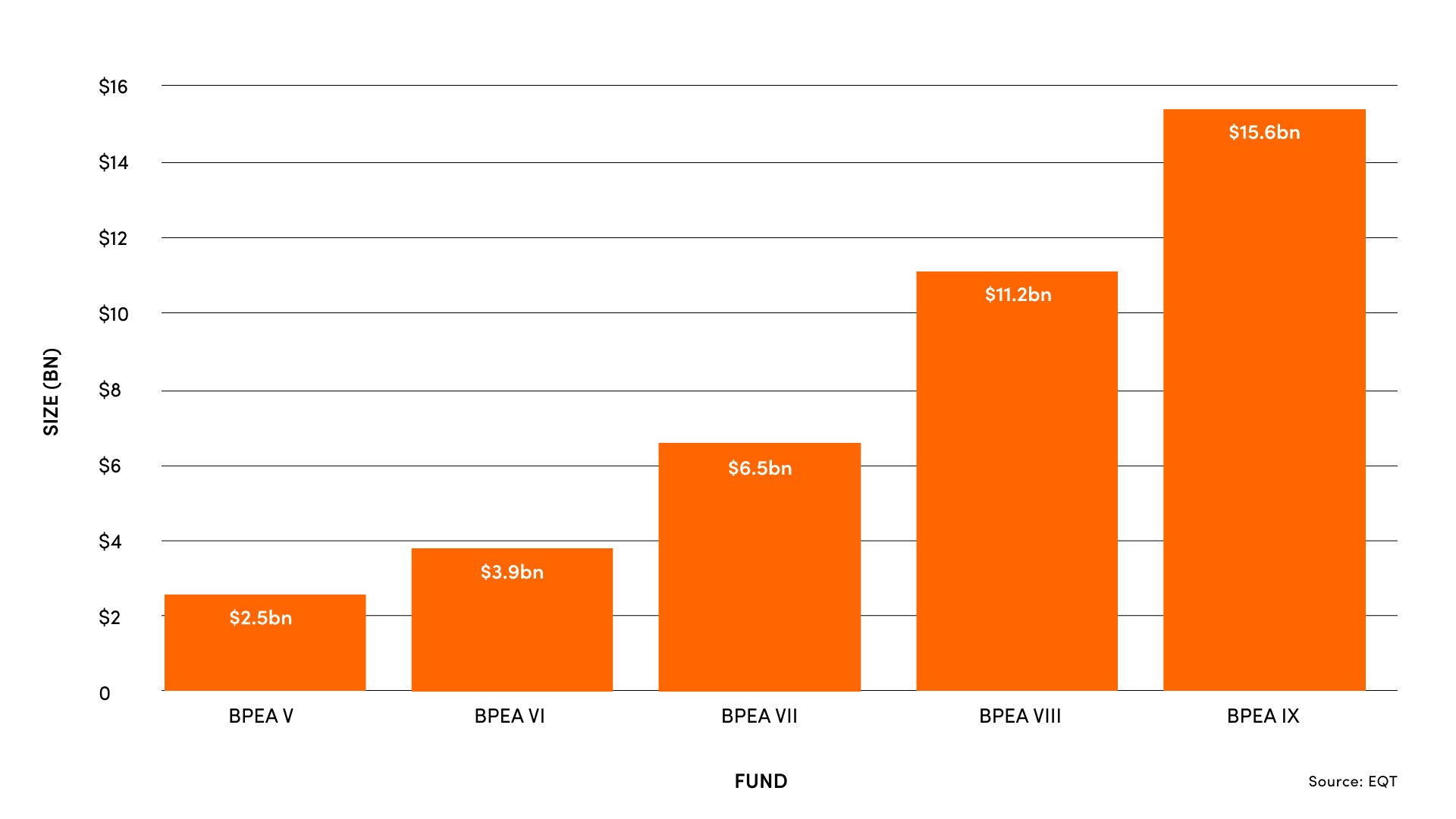
That growth creates a huge opportunity for investors. After EQT this week announced the close of the BPEA Private Equity Fund IX, the largest ever private equity fund focused on the Asia Pacific region with $15.6bn in total commitments, I wanted to take a moment to reflect on those opportunities.
Asian diversification
One of the greatest things about investing in the Asia Pacific region is that it’s so diversified. You have the faster-growing, younger countries, like India and those in Southeast Asia, as well as the more mature Japanese and Australian economies. Compare that to the U.S., which – although huge – is just one economy. Moreover, there's so much opportunity because Asia is so under-penetrated by private equity (PE). For example, in 2025, the region’s share of global private capital closed funds was just 5 percent, according to Bain. The buyout industry is already a 50-year industry in the U.S., and was initially fueled by local investors, like U.S. pension funds. Meanwhile India is about 20 years behind that, and further behind on the penetration curve. PE is a long life-cycle industry, and takes time to grow, but we’re at the forefront in Asia.
EQT has been working and investing in Asia for close to 30 years and we have people who’ve been in the industry for 40 years. We’re in all the key markets – Japan, India, South Korea, Australia, Southeast Asia and Greater China – and our approach has always been locals with locals, even as cross-border business continues to grow. That allows us to really drill down into each economy’s opportunities, making the most of the diversity across the region.
Relative size of EQT BPEA funds
Take, for example, Japan. Its aging population means that healthcare investment is a key theme for us there – as well as in Australia, a similarly mature market. Meanwhile, you have a lot of Japanese founders who want to find a good home for their business as they near retirement, or who are facing more public scrutiny and have to manage their businesses differently than in the past. Our attitude is: let’s take a good business and let's make it better.
Healthcare, education, finance
In markets with younger demographics, healthcare is still important, but education and financial services are also areas of interest for us. India is under-penetrated for credit; through our investments, we’re helping students borrow funds for their education overseas. We’re helping people buy their first homes and, as incomes rise, looking at opportunities in discretionary consumer. These people are aspirational: they’re buying their first cars or sending their kids to school. Being part of creating that wealth and stability for families is really motivating.
Asia will soon come to dominate the global middle class. By 2035, the region will account for 3.2 billion of the world’s 5 billion middle-class consumers, according to forecasts from World Data Lab. Our Asia-focused investment strategies are always looking for ways to address this era-defining trend.
The role of AI
Artificial intelligence has naturally been another huge global theme in recent years. AI is a generational shift in how value is created, not a passing cycle. It will reshape industries, with clear winners and losers
This is both opportunity and disruption: some business models will come under pressure, while high-quality, mission-critical companies can use AI to strengthen their competitive position and grow faster. EQT’s role as active owners is to drive urgency: AI is now a core agenda item for every board and management team, with a clear focus on execution, not experimentation.
When looking at the Asia Pacific region, we’re currently most focused on businesses operating in the AI application layer. One example is using the technology in fertility clinics, where AI can help identify eggs with the highest chance of success. Another is using AI to prototype molecules that can be selected for pharma companies. We think about how AI can be used in everyday life.
As I look forward, I reflect on the fact that the world is full of changes and as fiduciaries we need to be prepared for surprises – Covid, financial crises, changing governments, geopolitical pressures. But I feel optimistic that there’s growth and quality out there: good businesses, with good people.
If you think of demographics as destiny, there are stagnating populations in many richer parts of the world, yet young, growing populations in many parts of Asia. Add to that an underpenetrated industry, and families selling businesses, and you see the opportunities Asia offers for investors.
EQT is investing in the future of Asia, and we’re excited to help support Asian economies.
Hari Gopalakrishnan is a Partner, Co-Head of Private Capital Asia, Head of India and Global Co-Head of Services for EQT. Hari was a founding member of the India office at Baring Private Equity Asia from 2007 until 2022, when the company joined forces with EQT. Hari has led multiple successful investments in Technology Services helping build EQT's market leading franchise in the sector. Hari holds a PGDM from the Indian Institute of Management Ahmedabad and has an undergraduate degree from the University of Kerala.

ThinQ by EQT: A publication where private markets meet open minds. Join the conversation – [email protected]
MoreInsights







Exclusive News and Insights Every Month
Sign up to subscribe to the EQT newsletter.