

A Real Estate Strategy for the AI Race

The AI infrastructure race has echoes of a modern energy rush. But in data centers, proximity to people – not just power – may determine who captures lasting value, EQT’s Ali Houshmand and Will Simpson argue.
Technology firms plan to spend hundreds of billions of dollars on data centers as the race to win AI heats up – but data centers come in several flavors, with differing demands for connectivity and power.
The big four AI leaders expect to make $650bn in capital expenditures in 2026, according to a Bloomberg analysis. Alphabet, Amazon, Meta and Microsoft will each either nearly match or surpass their budgets for the past three years combined. Much of this money will be spent on data centers of various kinds. JLL, a real estate consultancy, estimates that the power consumed by data centers globally will roughly double between 2025 and 2030 as new sites open.
Yet amid all this excitement, investors should keep in mind that different types of data centers present fundamentally different opportunities. Data centers generally fall into three broad categories, depending on their use cases:
- AI training
- Cloud storage
- Inference
Each has differing needs.
AI training
When models adjust their internal parameters using large datasets to recognize patterns, they usually use massive data centers in remote locations. The value of the land these facilities sit on is almost entirely dictated by the availability of power. Proximity to end users is of little relevance.
Cloud data centers
These centers support the ongoing storage, processing and delivery of applications and enterprise workloads that underpin the digital economy. These facilities store the iPhone photos from your last vacation – or the Google Sheets budget for your next one.
The big four AI leaders expect to spend $650bn in 2026
Inference
This is the deployment phase, where trained AI models process fresh inputs and may have to produce results in near-real time: responding to a ChatGPT query or powering AI-enabled enterprise software, for example. Inference aligns most closely with EQT’s core real estate expertise – favoring metro-adjacent locations, deep local market knowledge and disciplined site selection over pure power arbitrage.
Types of inference data centers
Not all inference requires proximity to end users. Hyperscalers can route complex or less time-critical tasks to the lowest-cost facilities, which are often large training campuses with abundant power. If a user uploads multiple documents for analysis, for example, the task may be processed wherever operating costs are cheapest. In those cases, a response time of 60 seconds, rather than 30, won’t be decisive.
Performance-sensitive inference, where functionality depends on speed and responsiveness, is different. As AI becomes embedded in workflows, consumer applications and real-time systems, latency becomes critical. It is this segment of inference demand that is most likely to gravitate toward metro-adjacent locations, where proximity to users and network density enhance performance. These sites are also well-suited to support the continued expansion of cloud workloads, which remain the primary revenue driver for hyperscalers.
The growth of performance-sensitive inference presents investors with opportunities for attractive risk-adjusted returns, provided they understand the nuances of location, power and end-user demand. This is partly due to their structural tailwinds; AI training will be done in a short, intense burst, but inference scales with user numbers and usage. That’s why McKinsey projections show inference surpassing training to become the dominant workload in AI data centers by 2030, representing more than half of all AI compute and roughly 30 to 40 percent of total data center demand.
Granted, there are uncertainties around the growth trajectory of inference workload, too, but these facilities sit on multi-use land with alternative exit options. They are smaller, distributed and diversified, offering better residual value and downside protection.
Scale unlocks power
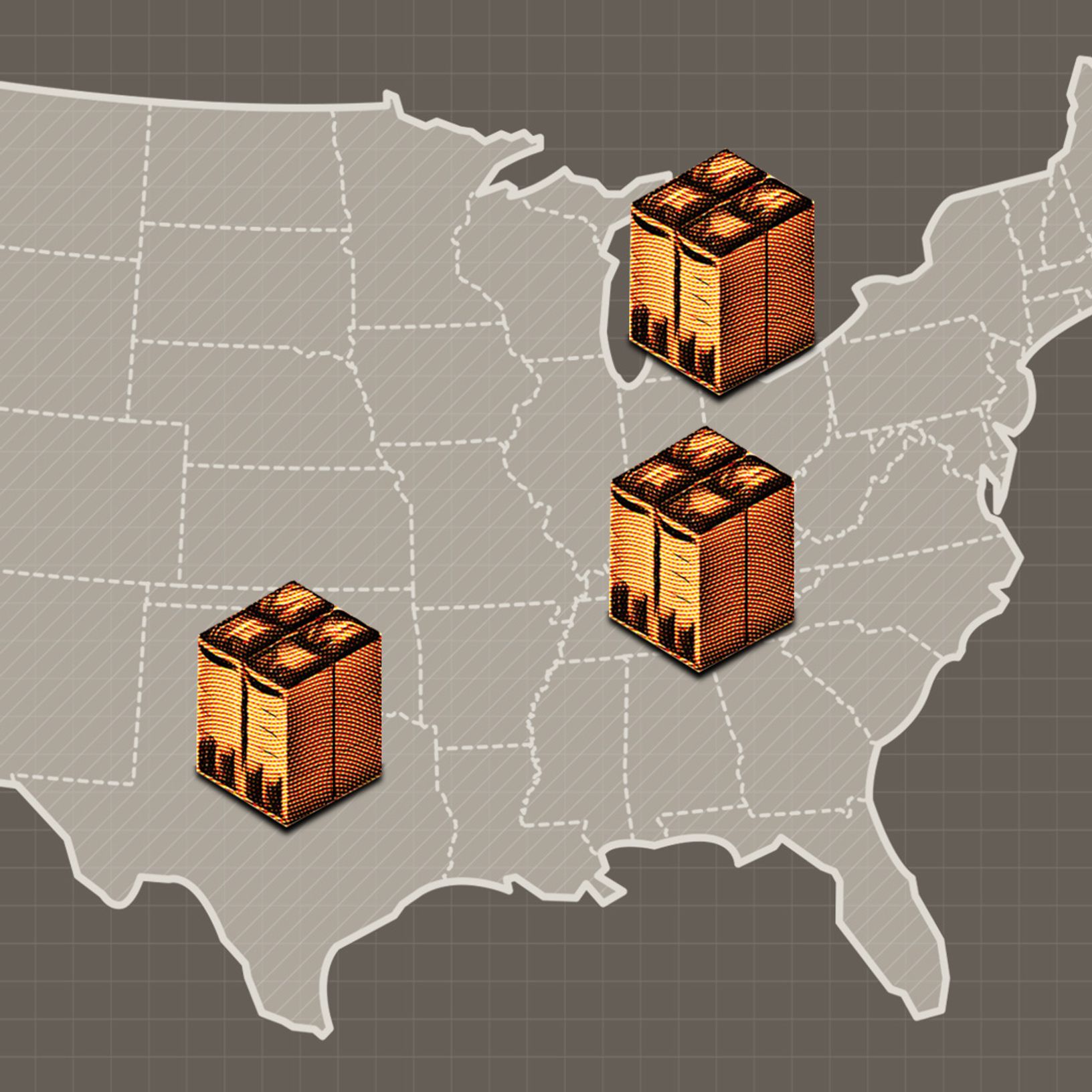
EQT owns around 350 million square feet of industrial real estate in the U.S., and is among the largest landlords in key growth markets for data centers, including Columbus, Ohio; Fort Worth, Texas; and Nashville, Tennessee. If we were to convert just one percent of that footprint into data centers, it would make EQT one of the largest real estate funds invested in the sector.
Satisfying inference demand fits neatly with our existing real estate business. We have local teams in more than 24 markets who know the sites near end-users, highways, fiber and power. That enables us to buy or repurpose industrial land and buildings and layer inference or cloud capacity on top, creating assets that benefit from both digital demand and enduring real estate fundamentals.
That said, our strategy is not dictated by land arbitrage. Where appropriate, we develop and retain powered shell facilities, delivering the structure and securing power while allowing end users to install their own systems. This approach aligns long-term ownership with durable income streams, rather than short-term land value uplift.
Power remains critical. As with remote training campuses, access to reliable, scalable energy is still often the binding constraint. The grid is overwhelmed, and the hyperscalers are implementing innovative solutions to circumvent slow connections. Natural gas is gaining appeal, for example, as it can power on-site engines, turbines or fuel cells, providing a measure of speed and flexibility where grid access is limited. Nowadays, buying land is often akin to buying a place in the power queue. The ability to accelerate that timeline is increasingly where value is created.
We use proprietary tools to find these sites. Our team has mapped the entire U.S. electrical grid, natural-gas network and zoning framework into a single platform. Each potential site is scored on access to power, proximity to substations and gas pipelines, zoning, site size and availability, allowing us to compare opportunities quickly. The tool alerts us to opportunities to embed inference capacity within our existing portfolio, or within industrial portfolios currently on the market.
Value uplift
This is a particularly opportune moment to pursue this strategy, early in a new real estate cycle. Liquidity in the industrial market remains constrained by elevated interest rates, and larger portfolios that would previously have traded at a premium are now changing hands at a discount.
Within these portfolios, we consistently identify embedded data-center optionality. The value uplift from converting raw land into powered sites can range from two to ten times, depending on grid access timing, entitlement speed or market demand – meaning a disciplined, data-led approach can crystallize returns quickly while preserving downside protection.
In some respects, today’s AI expansion resembles a modern energy rush. Developers pore over transmission maps instead of geological surveys, searching for electricity rather than oil. Yet unlike past commodity booms, it is possible to capture much of the upside while limiting exposure to the downside by investing in proximity to people and enterprises.
For EQT’s Real Estate team, the opportunity lies in combining power expertise with real estate fundamentals at scale. By focusing on assets that serve end users, retain alternative-use value and benefit from structural growth in inference demand, we believe it is possible to participate in the AI transformation while preserving resilience across cycles.
Ali Houshmand is a Partner with EQT and Global Head of Non-Traded REITs for EQT Real Estate. He leads the formation, strategy, and portfolio management of EQT Real Estate’s non-traded REIT initiatives, including EQRT (EQT Exeter Real Estate Income Trust), the firm’s first evergreen offering in the space. Prior to EQT, Mr. Houshmand served as Senior Portfolio Manager at the $50bn Texas Permanent School Fund (TPSF) from 2014 to 2022. There, he spearheaded real estate investment strategy and execution, committing over $2bn across funds, co-investments, and separate accounts, while representing TPSF on numerous advisory boards. Earlier in his career, Ali held roles at Arcapita, focusing on real estate joint ventures and asset management; Sama Dubai, where he was a Development Manager; Gladstone Commercial as an Acquisitions Associate; and JPMorgan, where he began as an analyst in the corporate banking group. He holds an MBA from the University of Virginia’s Darden School of Business and a BA in Economics and International Studies from Texas A&M University.
Will leads EQT Real Estate’s global data center investment strategy where he focuses on sourcing, evaluating, and managing new developments and acquisitions in the data center sector with an emphasis on hyperscale assets. In conjunction, drawing on two decades of experience in data center and real estate investments and more than $15 billion in transactions across hyperscale data centers, logistics, living and commercial real estate globally, Will works closely with operating partners and portfolio companies to support platform growth and long-term value creation. Prior to joining EQT, Will held a senior leadership role at EdgeConneX, a global data center platform serving hyperscale and edge customers. Leading global strategy and investments, he contributed to the company’s expansion into a global developer and operator with more than 80 facilities across over 60 markets in North America, Europe, Asia, and South America. His work included spearheading new market entries, hyperscaler leasing, structuring large-scale joint ventures, and leading complex M&A and development transactions. EdgeConneX was acquired by EQT Infrastructure funds during his time with the company. Before EdgeConneX, Will was a Principal at Blumberg Investment Partners, a high-net-worth family office focused on long-term investments in real assets, where he co-led the firm’s data center and logistics investment initiatives. Will began his career as a member of the acquisitions team at Federal Capital Partners (FCP), a real estate private equity firm focused on living and commercial strategies. He holds a BA in Economics from Middlebury College.

ThinQ by EQT: A publication where private markets meet open minds. Join the conversation – [email protected]
MoreInsights






Exclusive News and Insights Every Month
Sign up to subscribe to the EQT newsletter.