

René R. Kuijten: Building on Three Decades of Investment in Life Sciences


150 investments. 100 treatments and technologies. More than 40 acquisitions. But the full impact on patients is impossible to measure.
Biotech investors, scientists and entrepreneurs are usually looking ahead – focusing on the next medical breakthroughs, the remaining need among patients and the capital that will unlock future opportunities. As we gather in Amsterdam this week for the 25th anniversary of the BioCapital conference, we also want to reflect on the past: the more than 150 investments we’ve made and 100 medicines and technologies our portfolio companies have developed since the start of our journey three decades ago.
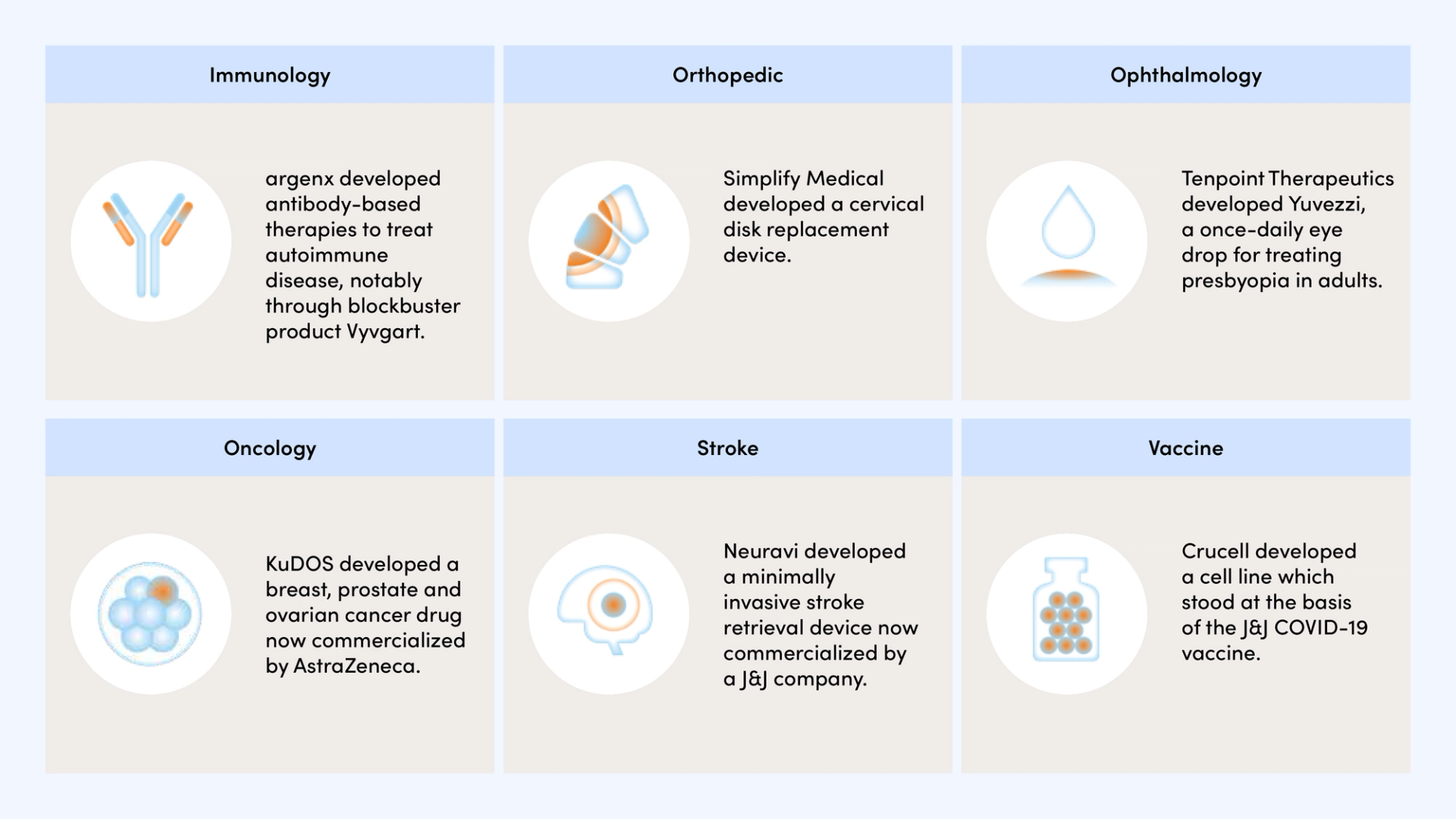
We’ve come a long way since the 1998 launch of LSP, the predecessor to EQT Life Sciences, supporting dozens of companies developing treatments aimed at cancer, immune disorders, dementia and an array of other devastating diseases. Consider just a few:
- argenx, the biotech company we backed in 2009 as part of a €9.5m investment round. Known for its antibody engineering expertise, argenx went public on Euronext Brussels and the Nasdaq in 2014 and 2017, respectively, becoming one of Europe’s most valuable biotech companies. Today it has a market cap of about €40bn.
- Crucell, the vaccine developer acquired by J&J for $2.4bn in 2010, developed a platform that provided the basis for J&J’s Covid-19 shot.
- Merus, acquired by Genmab for $8bn in 2025. The deal focused on a drug that has shown potential in treating head and neck cancer.
- Neuravi, the developer of an innovative stroke treatment acquired by J&J in 2017, two years after we invested in the company.
- Amolyt Pharma, acquired by AstraZeneca for up to $1.05bn in 2024. LSP had led the initial €67m funding round five years earlier.
Mobilizing investment
Every year, EQT Life Sciences assesses 2,000 potential investments. In the end, we choose about five. Those select companies are helping to solve some of the biggest medical mysteries, transform patients’ lives, curb mounting healthcare costs and solve challenges posed by an aging population. They’re also helping to strengthen Europe’s life sciences sector at a critical time. While Europe’s labs and scientists are world-leading, the continent falls short in reaping the rewards of its home-grown innovation.
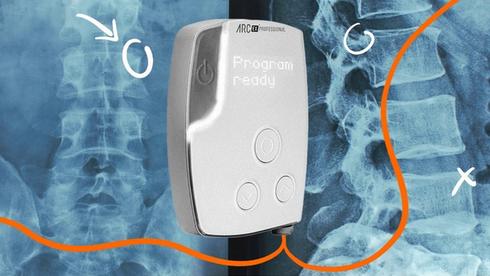
Onward Medical, for example, is helping people with spinal cord injuries regain mobility and function. Nobi is commercializing a smart lamp that helps to detect and prevent falls among older adults. PanTera is aiming to widen access to therapies that can deliver radiation safely and effectively, and Tubulis is among companies developing a new class of cancer drugs that are designed to deliver powerful cancer-killing medicines directly to tumor cells while sparing healthy tissue. The German company in October raised another €308m, the largest financing round for a privately-held antibody-drug conjugate developer globally.
Developing a new drug and getting it to the market can take up to 20 years. Most experimental treatments fail along the way. EQT Life Sciences, which has raised about €3.5bn across a dozen private funds and three different investment strategies, focuses on the five to seven years in the middle – the period in which the value creation is the greatest and the work is the most complex.
Portfolio Company Highlights of the Past Three Decades
Patient impact
The funds we’ve deployed have sparked additional investment that helps drive innovation. Our Dementia Fund, for instance, has raised about €275m, but mobilized another €1bn. We believe dementia today is where oncology was 20 years ago. It’s not a single disease. It’s many.
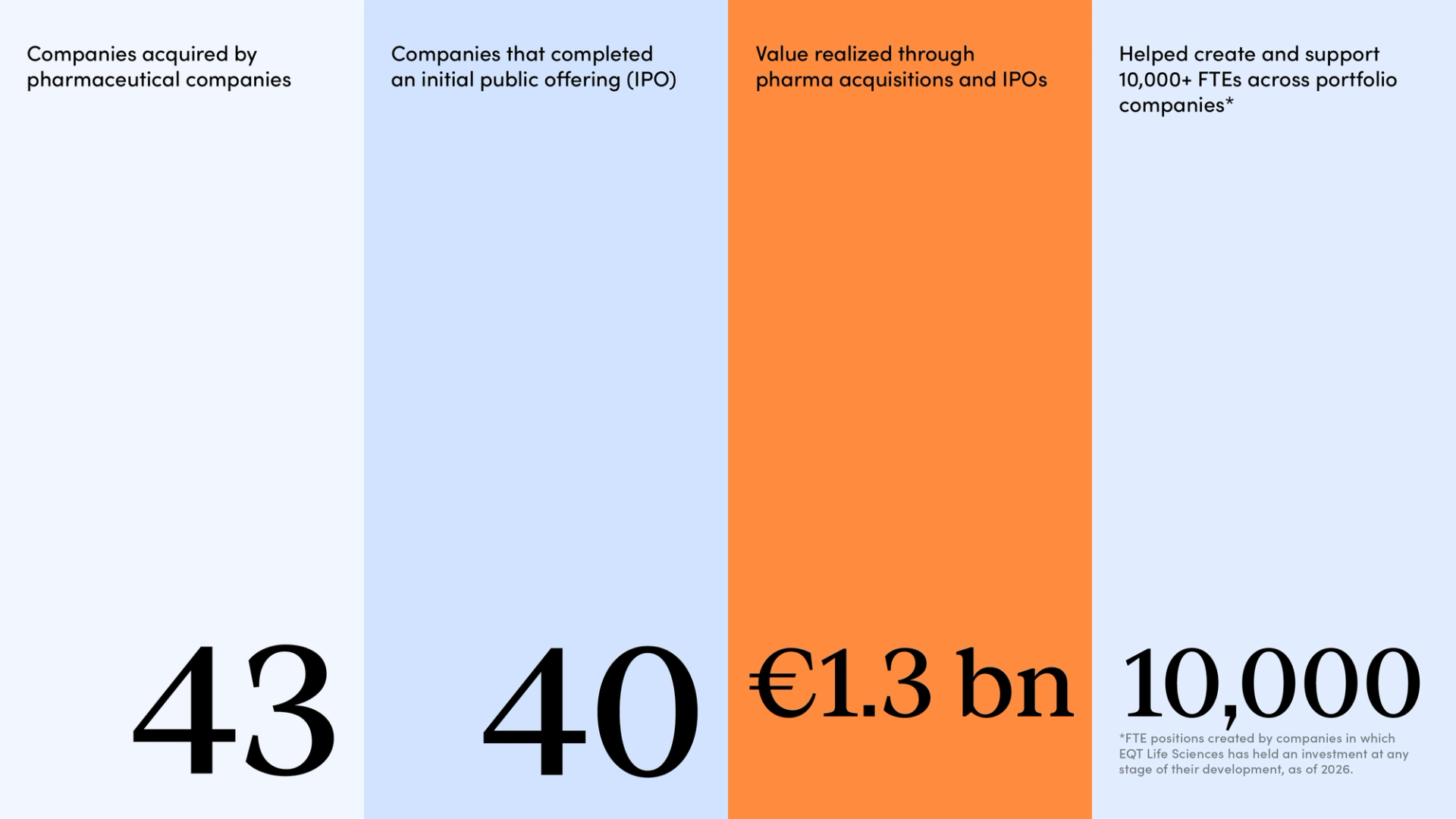
Our new report – Driving Healthcare Innovation – shows 43 portfolio companies have been acquired by pharma companies, while 40 have completed an initial public offering, with €1.3bn of value realized. More than 10,000 jobs have been created, and tens of thousands of medicines are advancing in clinical trials.
But the stats don’t tell the whole story. The impact on the lives of patients is impossible to measure. As we reflect on the investments and partnerships we’ve forged over the past quarter-century, we’re also looking for the next opportunities that will benefit patients, alleviate pressure on health systems and tackle challenges such as dementia over the next 25 years and beyond.
A Few Key Stats

ThinQ by EQT: A publication where private markets meet open minds. Join the conversation – [email protected]
On the topic ofHealthcare





Exclusive News and Insights Every Month
Sign up to subscribe to the EQT newsletter.