

Sweden’s Einride Aims to Lead a Driverless Revolution
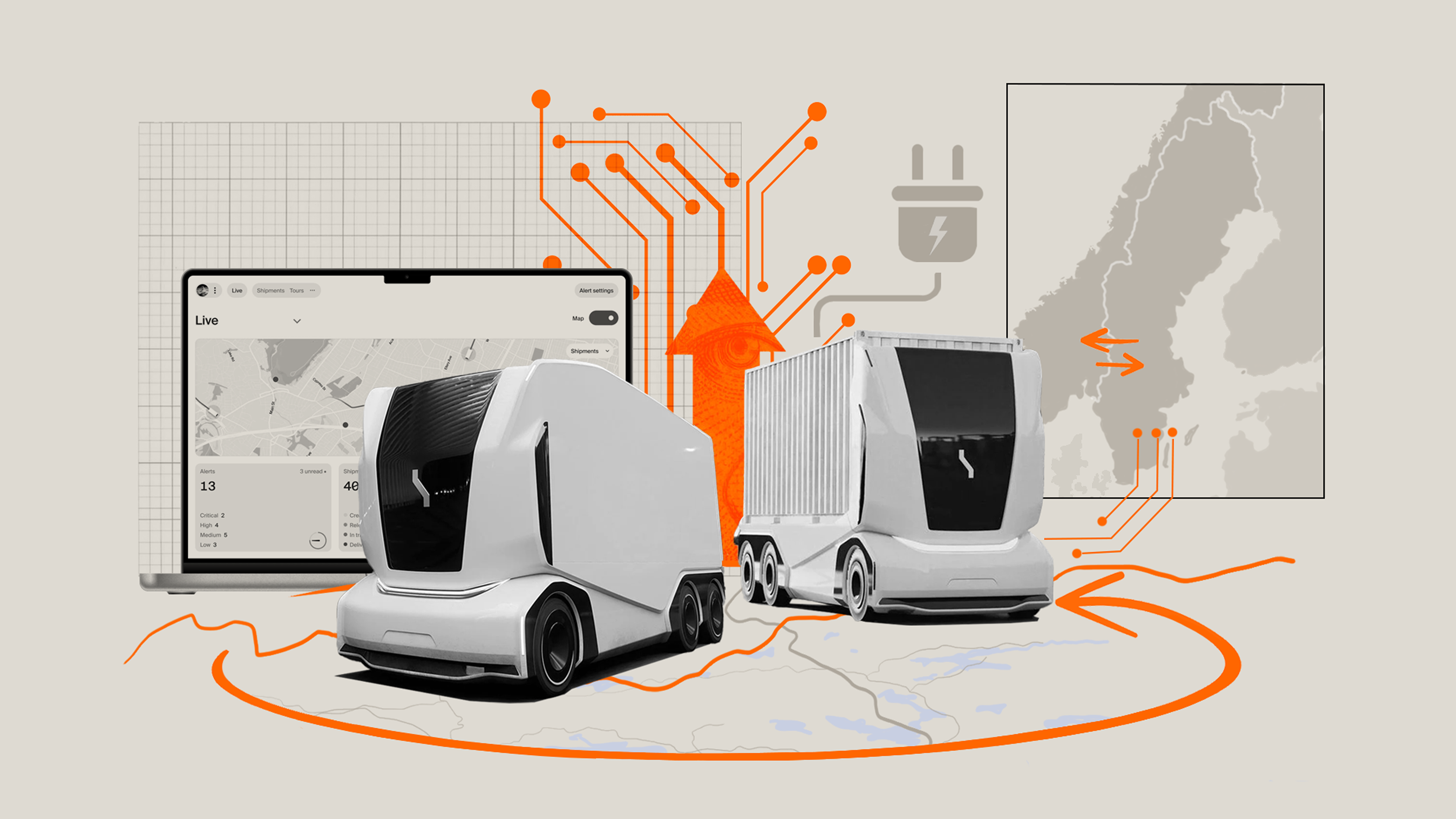
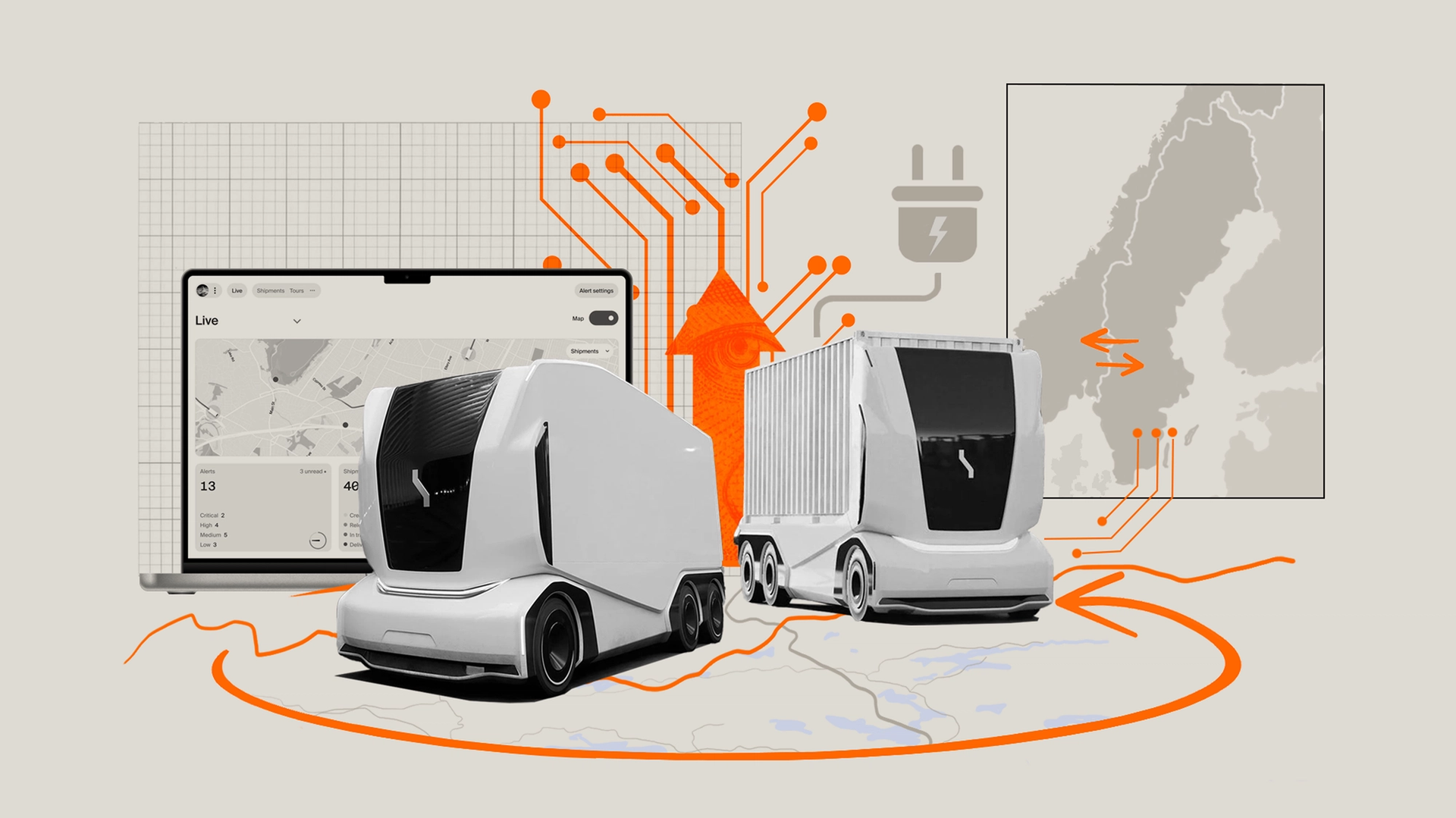

The deep-tech firm backed by EQT Ventures is seeking to transform road freight with electric, autonomous trucks that can navigate Europe’s regulatory maze.
- Einride completed the world’s first cross-border driverless delivery between Sweden and Norway.
Just after sunrise on a frosty September morning, a sleek white vehicle carrying parcels hummed across the Ørje border from Sweden into Norway. No driver was at the wheel. This was not science fiction, but the culmination of years of work by Einride, a Swedish freight technology company.
The world’s first fully autonomous, cab-less electric truck had just completed an international delivery. For the company, the feat was as much a breakthrough in regulatory navigation as it was a display of technological innovation.
The single journey on behalf of logistics giant PostNord symbolized the promise of European deep tech. A driverless truck can handle the tedious realities of cross-border freight, just like one with a human in control. The achievement also offered a counterpoint to the narrative of European technological sluggishness, demonstrating that while the continent’s fragmented markets and cautious investment culture can pose challenges, they are not insurmountable.
Founded almost a decade ago, Einride set out with an ambition of decarbonizing the global supply chain, reducing road freight emissions by as much as 95 percent through a shift to electric vehicles. The company’s name means “the lone rider,” a reference to Thor, the Nordic god of thunder and lightning. These trucks are designed to run independently, powered by electricity rather than fossil fuels.
Road freight is the backbone of the global economy, but comes at a steep environmental cost, accounting for about 5 percent of global CO2 emissions. Einride’s co-founders, Robert Falck, Linnéa Kornehed Falck and Filip Lilja, saw a future in which freight was more sustainable. They also wanted to make it safer and more efficient. Their vision was not merely to build an electric truck, but to reimagine the entire freight ecosystem. The result is a platform that combines purpose-built electric and autonomous vehicles, smart charging infrastructure and an AI-powered operating system called Einride Saga.
“We’re gathering data today and giving customers the benefits of cost savings and CO2 savings,” says Roozbeh Charli, Einride’s CEO. “We understand their networks and then we can increase the level of automation over time.”
Despite the company’s name, its journey has been anything but solitary.
Backing the company’s growth is EQT Ventures, which first invested in Einride in 2019 and contributed to a $100m round in October. The investment has allowed Einride to stay competitive in the race to introduce electric and autonomous freight solutions.
Built Autonomous
Unlike retrofitted vehicles, Einride’s purpose-built, self-driving trucks are designed to be autonomous. By removing the driver’s cab entirely, they create a vehicle optimized for freight, not people, with all the necessary redundancies built in from the start. The design aims to improve aerodynamics, increase cargo capacity and reduce manufacturing complexity. These silent workhorses are guided by an autonomous system that processes millions of data points per second to navigate complex routes. Its safety record is, to date, incident-free.
While the trucks drive themselves, they are not unsupervised. From a control tower, human operators monitor the fleet like air traffic controllers. Through a remote interface, these “new kinds of truckers” can oversee operations using 360-degree camera feeds, intervening if necessary. The Saga software acts as the brain of the entire operation, coordinating everything from vehicle dispatch and route planning to charging schedules and load optimization. Relying on this data-driven intelligence, Einride can keep its autonomous operations running 97 percent of the time.
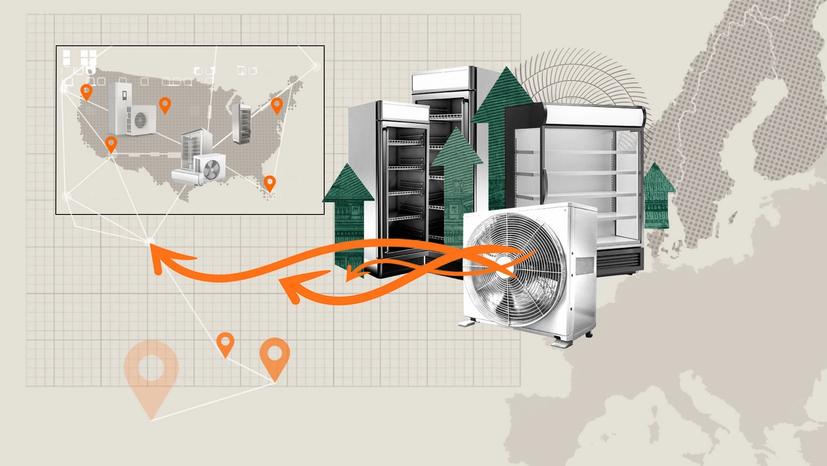
The approach has attracted some of the world’s biggest companies. In the U.S., GE Appliances is using Einride for the country’s first full-time daily autonomous shipping route. In Europe, food giant Mars, partnering with Einride, is deploying a fleet of 300 electric vehicles across Germany, the UK, and the Netherlands.
Ready for Global Deployment
Einride’s journey, however, highlights the unique challenges faced by European tech champions. As the CEO Charli explains, even under the European Union umbrella, navigating the continent is a country-by-country approach. Each nation has its own regulatory environment, a stark contrast to the more unified (though not simple) federal system in the U.S. For a company in a regulated business like autonomous transport, this fragmentation presents a significant hurdle.
“What we have tried to do is have a model that lends itself to local adaptation,” Charli says. “EQT’s presence in many of these markets has helped us a lot in understanding those differences and using them to our advantage.”
The Sweden-to-Norway border crossing was, therefore, an important test. It required not only a truck that could drive itself but also a system that could digitally navigate two different sets of customs procedures, integrating with Norway’s “Digitoll” system to clear goods before they even arrived.
Einride’s ability to work constructively with regulators across multiple countries, and its participation in EU-backed projects, such as the public-private partnership called MODI, shows a path forward. After demonstrating its model in the complex European environment, Einride is getting ready for a global rollout.
“Over the next 12 to 18 months we’ll be continuing to scale with our customers, going from single-digit autonomous vehicle deployments in one location to larger deployments, and increasing the number of vehicles we’re operating,” Charli says. It’s a “stepwise journey.”
The driverless truck crossing shows that European deep tech, backed by patient capital, can not only navigate its home continent’s complexities but contribute to a quiet, clean and intelligent transformation.

ThinQ by EQT: A publication where private markets meet open minds. Join the conversation – [email protected]
On the topic ofCase Studies



Exclusive News and Insights Every Month
Sign up to subscribe to the EQT newsletter.