

ReliaQuest’s Mission to Fight Cybersecurity Threats With AI Agents
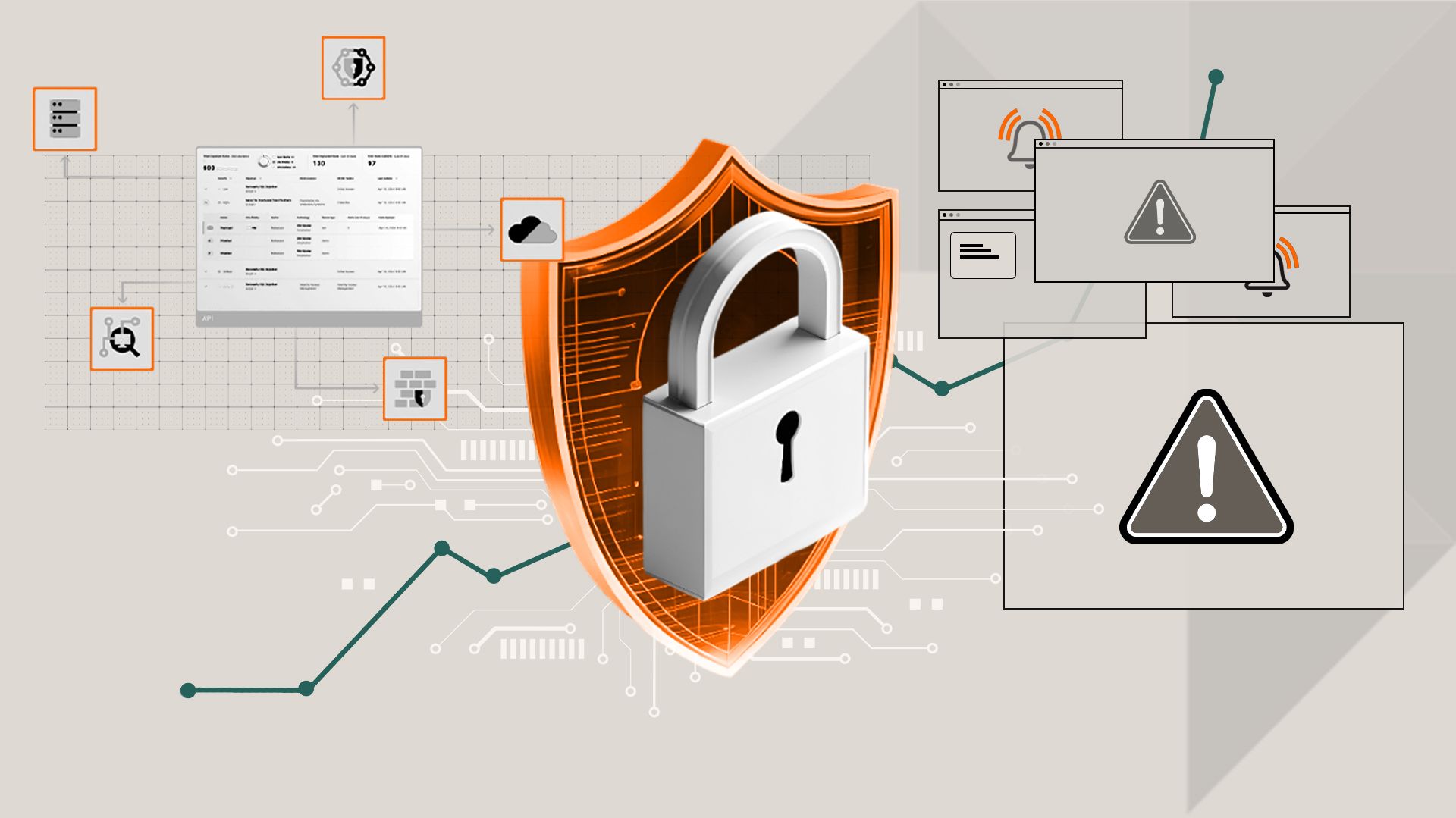


Kirk Lepke, a partner in EQT’s Growth team, explains how Florida-based ReliaQuest is using AI agents to tackle cybersecurity threats.
- Bad actors are leveraging AI and automation for faster and more effective cyber attacks, creating a flood of alerts for companies.
Cybersecurity has matured into a sprawling ecosystem of thousands of specialized tools. Meanwhile, threat actors are leveraging AI and automation for faster and more effective attacks. For enterprises, this creates a flood of alerts across their cyber stack.
There’s been some automation, but security operation centers (SOCs) are still struggling to keep pace, switching between different tools and trying to correlate and understand what’s happening across their digital infrastructure, while attackers can move laterally in as little as 20 minutes. Security teams no longer have time to do this work manually, making automation an operational priority.
ReliaQuest addresses this problem with its GreyMatter platform. GreyMatter detects threats at source, triages them, automates responses where it can, and escalates to a human where necessary. Agentic AI has been a massive boost to this model. Role-based agentic teammates can now handle lower-level alerts, known in the industry as tier-one and tier-two alerts, leaving humans to focus on more complex investigations.
GreyMatter’s agentic AI capabilities are underpinned by a proprietary orchestration engine called Flex, which routes tasks across five external LLMs and an in-house language model. The system selects the most effective model for each alert and type of action, allowing Florida-based ReliaQuest to continuously evolve by swapping in the latest models as they emerge, while retaining accuracy and reliability.
AI’s efficiency gains
Internally, agentic AI has enabled dramatic increases in both efficiency and performance, while freeing up resources to redirect into accelerated product development. The results speak for themselves: ReliaQuest has improved gross profit margins by more than 20 percentage points while doubling its customer count. This is driven by a reduced need for in-house SOC analysts, as GreyMatter agents are providing meaningful leverage. In parallel, ReliaQuest has been able to increase its software engineering team, demonstrating that AI is not replacing headcount so much as allowing companies to reallocate budget to higher-value areas.
ReliaQuest’s customers are also fully embracing AI. The company has seen a remarkable 6.5x year-on-year growth in AI usage across its customer base. Close to 60 percent of customers have adopted agentic AI, with fully automated workflows increasing from 30 percent to 50 percent over the past quarter.
This mirrors trends across the industry. Thirty percent of security teams have already integrated agentic AI into operations as of July 2025 for tier-one and tier-two triage, according to an ISC2 survey, and another 42 percent are evaluating adoption.
It has also reduced threat containment time from eight hours with manual responses to five minutes on average with full automation. In other words, customers can contain threats faster, minimizing impact and improving their security posture.
The next frontier is shifting more decisions from human-in-the-loop to fully autonomous. For mission-critical cybersecurity operations, this will be a more gradual transition than other segments, but the trajectory is very clear, with SOCs evolving from reactive response to proactive threat prevention. ReliaQuest and other market leaders with long-standing customer trust and proprietary datasets are well-positioned to lead this shift.
Kirk Lepke is a Partner at EQT, where he invests across the ScaleUp Europe Fund and EQT Growth. He is a full stack AI investor spanning applications, infrastructure and cybersecurity, having led investments into Mistral, ReliaQuest, Mews and CluePoints. Kirk joined EQT in July 2023 and is based in London. He is a member of the Investment Committees for both ScaleUp Europe and EQT Growth. Prior to EQT, Kirk was a Managing Director at Goldman Sachs where he helped build the Growth Equity business across Europe and Israel. Before Goldman Sachs, Kirk worked for Summit Partners, a tech-focused growth equity fund, and began his career in TMT advisory in the US. Kirk holds a BA in Entrepreneurship and Technology Management from Brown University.

ThinQ by EQT: A publication where private markets meet open minds. Join the conversation – [email protected]
On the topic ofCase Studies






Exclusive News and Insights Every Month
Sign up to subscribe to the EQT newsletter.