

Who Are HNWIs and Where Do They Invest




A High-Net-Worth-Individual is a status defined by the minimum amount of assets, including cash, stocks, real estate, and businesses, owned by an individual and their family. Here is what that means.
- HNWIs need to have at least $1m in assets (excluding primary residence) in order to qualify for the status, though definitions will vary by financial institution.
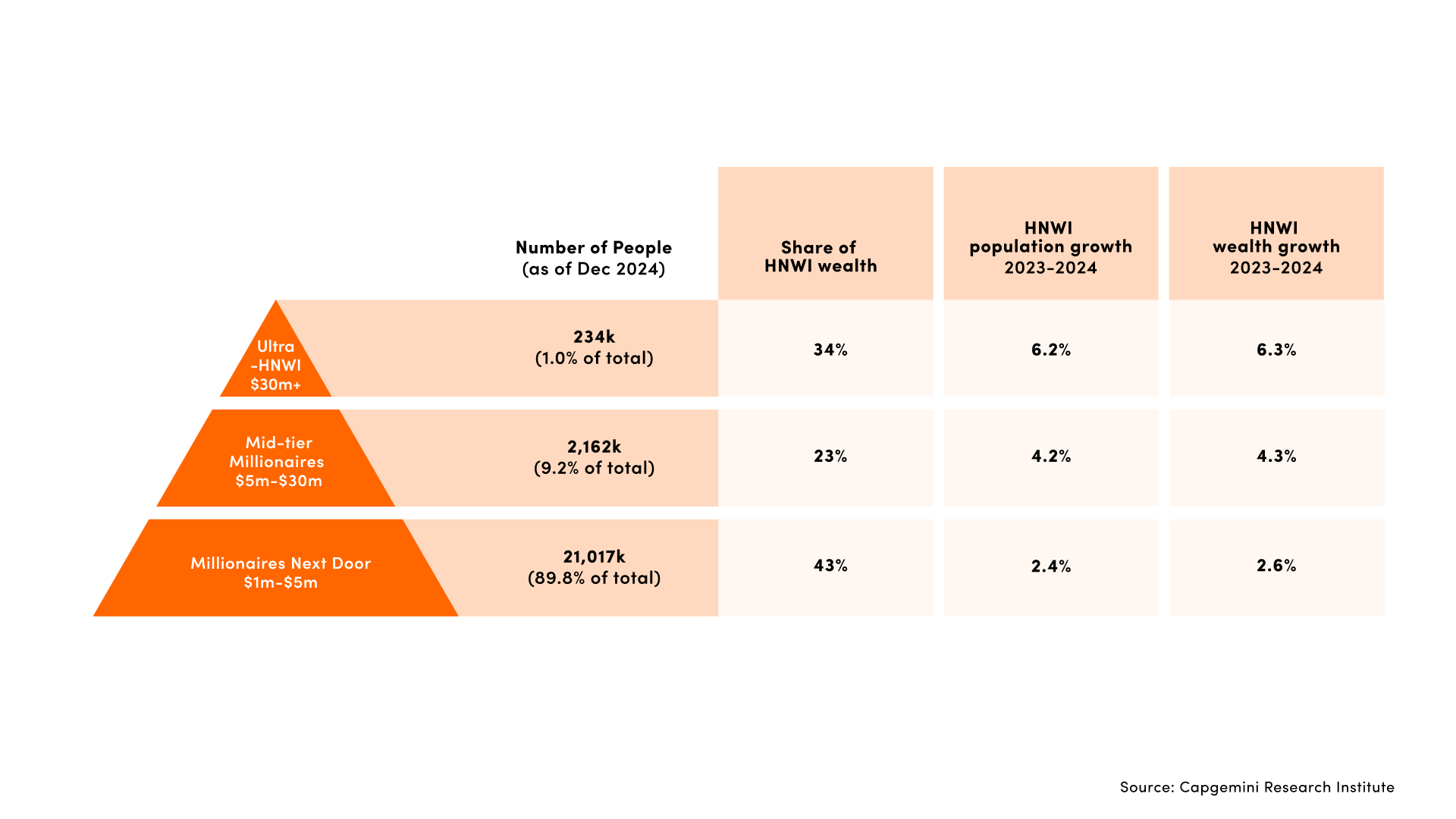
More than 23 million people worldwide held more than $1m in investable assets in 2024. The total wealth held by these high-net-worth individuals (HNWIs) was $90.5tn, according to Capgemini. That’s a lot of money, and it’s been growing at 3.7 percent a year since 2017.
Investable assets held by HNWIs are what the investment industry calls private wealth. It indicates a level of wealth that opens doors to financial advisers, tax planners and private banks.
Both the accumulation and distribution of private wealth have significant implications for the economy and society at large. Wealthy individuals or groups often fund businesses and investments, in turn spurring economic growth.
However, there are negative effects on an economy associated with private wealth, too. Disparities in wealth distribution can lead to social and economic inequalities, which is why policies related to tax, inheritance, and wealth management are often controversial and subject to public debate.
Capgemini’s report showed that one-third of all private wealth is held by 234,000 ultra HNWIs. These are people with more than $30m to their name, and this is indicative of the concentration of wealth in the hands of a relatively small number of people.
Wealth and population growth concentrates around higher wealth bands
Private wealth assets
Private wealth encompasses a range of assets. The most common ones fall into a few categories.
Securities such as stocks and bonds. These are easy to buy and sell, so they often play a large part in wealth management strategies.
Real estate includes residential homes, commercial buildings, and land. This category makes up a major chunk of the value held in private wealth. Real estate is not as liquid as financial assets, but it’s sought after as it often appreciates over time.
Business ownership is common among holders of private wealth, as equity can amount to significant stores of wealth. This can range from small family-owned businesses to bigger private corporations. Business owners often borrow against the value of their shareholding to finance investments in other assets.
Alternative investments include private equity, hedge funds, art, cryptocurrencies, collectables, and commodities, including gold and silver. Investors explore these assets because they can offer significant returns and are often not directly correlated with mainstream markets, meaning they can hedge against certain economic outcomes.
Cash, including foreign exchange, is the most liquid asset to hold, though its value is usually lessened over time by inflation.
Managing private wealth
Wealth managers use a range of strategies when working with private wealth clients, in an effort to protect (and ideally grow) a portfolio while minimizing risks and tax liabilities. There are some techniques that are most common.
Professional investment management involves managing investment portfolios by monitoring markets and trading certain assets. The goal will depend on the client: the portfolio manager could be tasked with an aggressive approach to increase returns, but more often, the guidance is to protect the underlying wealth and achieve modest but stable increases over time.
Financial planning is as it sounds: professionals craft comprehensive plans for clients, outlining financial goals and the steps needed to achieve them. This often has a specific milestone or goal at the center, ranging from retirement planning to saving for education to estate management.
Tax planning refers to the precise use of certain tax-advantaged accounts and investments to minimize tax liabilities.
Estate planning in isolation refers to the management of an estate during an individual’s life and after their death. The estate refers to an individual’s entire collection of wealth, and an owner will be encouraged to set up wills and trusts to make sure their wishes are held after death, as well as helping to lessen tax ramifications and legal complications.
That touches on a crucial aspect of private wealth: how it’s transferred across generations.
“Legacy planning” ensures that wealth is passed on efficiently and in accordance with the owner’s wishes. As well as trusts and wills, individuals can often contribute to charity during their lives and after death. In addition to regular donations, many HNWIs choose to set up foundations to support causes close to their hearts. To make philanthropy even more appealing, there are plenty of tax benefits and reputation-boosting aspects that come with doing good.
Private wealth touches on personal finance, investment themes, business creation and management, tax, and economic policy. For HNWIs, effective and strategic financial planning can lead to financial security, portfolio gains, and the achievement of long-term goals. As the economic landscape evolves and the world’s very wealthiest continue to accrue more assets, government policies related to legacy planning will be key to ensuring that wealth serves both individual aspirations and the wider society.
Henry Jones is EQT’s Director of Content and the Global Head of ThinQ by EQT. Before joining EQT, he was an editor and content director for brands and media companies including Dyson, The Evening Standard and John Lewis.

ThinQ by EQT: A publication where private markets meet open minds. Join the conversation – [email protected]