

Peter Aliprantis: Private Markets Are Global, U.S. Private Wealth Portfolios Should Be Too



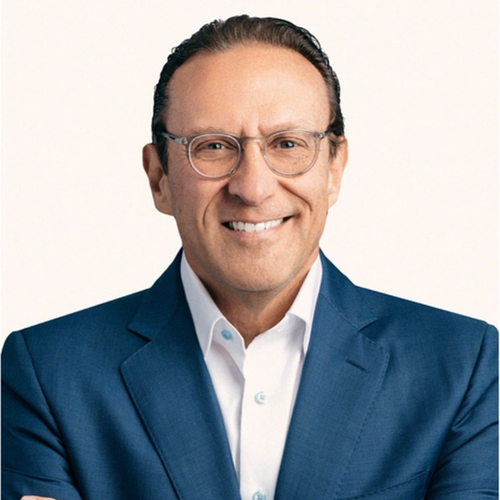
Home bias in investing is only natural, but when domestic opportunities become constrained, it’s wise to look overseas, argues EQT's Peter Aliprantis.
Global diversification is a hot topic among investors who have benefitted from the growth of U.S. markets in recent years. In pretty much every conversation I’ve had with wealth advisers over the last few months, the discussion has turned to the pros and cons of growing allocations in Europe and Asia.
Public markets in the U.S. are close to all-time highs, so investors are rightly asking: what next? Big names on Wall Street have expressed concern that a correction is on the horizon, citing geopolitical instability and AI overhype.
Meanwhile, in U.S. private markets, companies are staying private for longer and competition for deals is as intense as ever. A key concern of the wealth advisers I speak with is the slowdown of the exit market. Cash distributions to investors have slumped to their lowest in more than a decade as sponsors delay exits awaiting better valuations.
This isn’t to say that the U.S. is an unattractive market – far from it. EQT has been in the U.S. for nearly 20 years; more than a third of our invested capital is here and we expect to double our investments in North America to $250bn over the coming five years. It’s more about not having all your eggs in one basket.
The diversification mindset
Seven of the world’s ten largest private markets firms are U.S.-based, and their allocations are weighted heavily towards the U.S. This home bias is only natural as people like to invest close to home. But when domestic opportunities become constrained, it’s wise to look overseas, and many U.S. firms are now turning their attention to Europe and Asia. For EQT, however, the global diversification mindset has been ingrained in our DNA from the very beginning.
With a domestic population of just over 10 million, Swedish companies understand that looking beyond their home market is a prerequisite for long-term growth. Just look at IKEA, Spotify, Volvo or Klarna. The same holds true to EQT. We have evolved from a Nordic-focused fund into the world’s largest private markets firm outside North America. For us, global diversification is both a necessity and a tradition.
Over the last 30 years, EQT has built deep roots all over Europe and Asia, regions we consider our home markets. With local teams in 25 countries across both continents, we can navigate the diverse cultures, languages, and political dynamics that define these fragmented markets. We call this our “local-with-locals” approach – combining global reach with local insight. It’s an advantage that can’t be built overnight.
Fundamentals for success
Europe sometimes gets a bad rap from U.S. investors because of the comparative underperformance of its public markets. But private markets in Europe have actually outperformed its public markets by far, and this is where our interest lies. Our data shows that European entry multiples are 1.5x lower than in the U.S. – yet Europe attracts 60 percent less private capital than the U.S.
It’s true that productivity and technology innovation in Europe has lagged the U.S. and Asia for some time now. However, Europe has many of the fundamentals needed for long-term success: world-class research institutions, a highly-educated workforce, and vibrant startup hubs. European Union policymakers are also stepping up to reignite growth by boosting private capital markets, cutting red tape and encouraging entrepreneurship. At EQT, we’re optimistic about Europe’s growth prospects and plan to double our investments in the region to €250bn ($297bn) over the next five years.
In Asia, rapid economic growth is being driven by demographic tailwinds. A fast-growing middle class – which is expected to account for more than 60 percent of the global middle class by 2030 – is fuelling a boom in consumer industries. The region is responsible for 60 percent of global GDP growth and is home to 60 percent of the world’s population – yet it accounts for just 7 percent of global private equity allocations. Many companies are under-managed and in the midst of generational ownership transitions, which creates opportunities for active owners who specialize in operational performance improvement rather than financial engineering. In addition, Asia’s fragmented market landscape often creates liquidity cycles that are uncorrelated to those in the West.
So, U.S. investors waiting for the domestic exit window to reopen might look across to Asia, where conditions currently are far more favourable. In 2025, 24 percent of EQT’s liquidity events occurred in Asia – a region that represents roughly 15 percent of our assets under management (AUM) – underscoring the strong momentum and realization activity in the region.
If the exit window is closed – or only slightly ajar – in one part of the world, it often swings open somewhere else. As such, having access to multiple global exit portals is of huge benefit when clients come calling for returns. This is just one of the advantages of being a truly diversified private markets firm with boots on the ground all over the world.
Peter Aliprantis joined EQT in October 2024 as a Partner and Head of Private Wealth Americas, based in New York City. Prior to joining EQT, he spent 12 years at TPG Angelo Gordon as a Managing Director, focusing on new business development and intermediary distribution. With over 25 years of experience in private wealth, he has worked across private banks, wirehouses, family offices, and digital platforms.

ThinQ by EQT: A publication where private markets meet open minds. Join the conversation – [email protected]




Exclusive News and Insights Every Month
Sign up to subscribe to the EQT newsletter.