

The Challenge of Creating Europe’s First Trillion-Euro Company
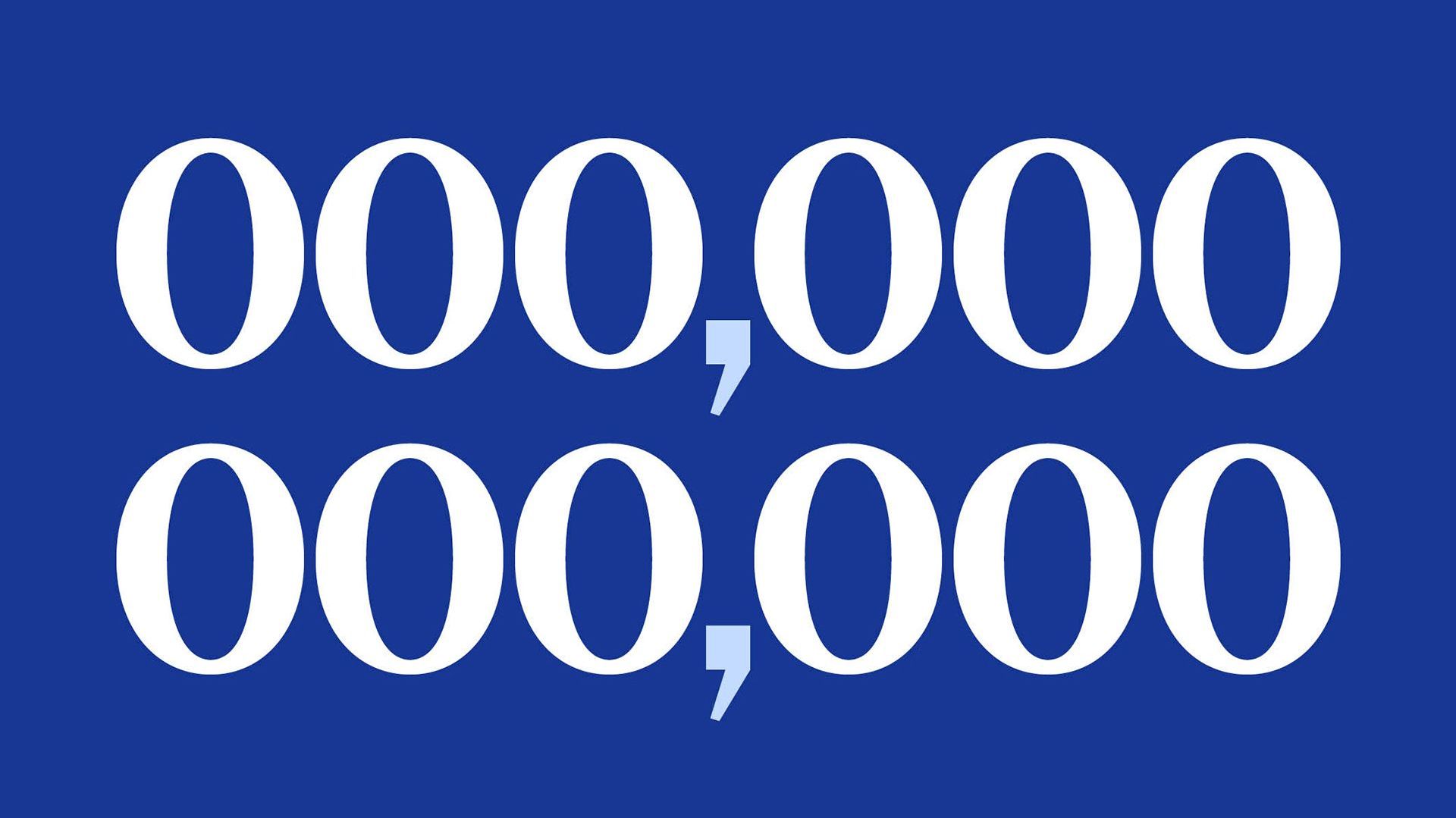

Europe has never built a company worth more than a trillion euros. The European Union’s new Scaleup Europe Fund is one step towards changing that.
- Europe has never built a trillion-euro company. Even ASML, its most valuable, falls short.
Europe’s most valuable company makes machines as big as a double-decker bus that etch circuitry only a few dozen atoms wide. Lithography technology from ASML, based in the Dutch town of Veldhoven, is essential for making the world’s most advanced computer chips, upon whose brittle silicon shoulders the global boom in AI has been built.
After more than doubling in value over the past year, ASML is worth about €600bn ($680bn), twice as much as any other European company. But that success only serves to underline the gap with the U.S., which has produced more than a dozen trillion-dollar businesses. At the time of publication, chip designer Nvidia, founded in California in 1993, is worth about $4.7tn, Apple and Alphabet are above $4tn, while Meta and SpaceX are past $1.5tn.
When former European Central Bank president Mario Draghi examined European competitiveness in 2024, he found that no European Union-based company built from scratch in the past 50 years had reached a market capitalization of €100bn, let alone a trillion. ASML may be one of the continent’s best hopes of passing the trillion mark, but it began as a 1984 joint venture between Philips and ASM International, not a startup founded from nothing like Meta or Amazon. The names rounding out the top five of most valuable EU companies – LVMH, Siemens, L’Oréal and Novo Nordisk – all trace their origins back more than a century.
To build a new generation of winners, Europe needs to get better at deploying capital, argues Ronan Chambers, co-founder of Europe Tech Network, a podcast series that aims to amplify European technology voices. “It’s not that Europe has a talent problem, or a technology problem, or a location problem,” he says. “The money is there. It’s a resource allocation problem.”
‘The challenge is to scale’
For Europe, building giant companies is more than a matter of pride. If the EU can’t keep and scale its most promising firms, it risks being forced to become a renter in the new AI economy, paying for access at firms it does not control. A good example of that dependence came in June, when Washington briefly cut off global access to AI firm Anthropic’s (estimated private valuation: about $1tn) latest models on national security grounds.
As one step towards helping European companies thrive, the EU announced plans last year for a new fund to back the region’s most promising scale-ups. In May, the EU selected EQT to lead this Scaleup Europe Fund, which will back European technology companies from Series B onward, providing around €100m per investment.
“The challenge is no longer creating great early-stage companies. Europe has demonstrated it can do that, with its world-class founders, top-tier universities and deep technical talent,” Christian Sinding, EQT’s former chief executive, said at the European Innovation Council Summit in June. “The challenge is to scale those businesses into global leaders, while keeping their roots in Europe.”
Quantum’s solace
Research from EQT and McKinsey published earlier this year found that Europe is already producing a large and growing cohort of promising companies across some of the most strategic technology sectors of the next decade, including AI, robotics and energy. It forecasts that the number of European scale-ups (defined as raising a Series C or later in private financing) will grow by more than 2.5x to around 1,900 by 2030.
“I believe that Europe will have the first quantum [computer] and will lead in quantum,” Ekaterina Zaharieva, the EU commissioner for startups, research and innovation, said at the same EIC summit. “But to continue to do so, those companies should not [find that] the only way to scale and to be listed is to go to New York,” she added.
While access to capital is one part of the solution, European authorities can also do more to help companies grow, Chambers argues. The CEOs of regional champions like ASML should be speaking with members of the European Commission on a weekly basis to see what obstacles to growth can be cleared out of the way, he says.
Europe needs to act on three fronts to unblock its companies’ avenues to growth, argues EQT partner Sandra Malmberg.
1. Unified distribution. The EU’s population is bigger than the U.S., with an economy about two-thirds the size. A startup founder should be able to launch and scale across this market as easily as in the U.S., Malmberg says.
2. Attracting the best talent. Some 65 percent of the top American AI businesses were founded by immigrants, many originally from Europe, according to the National Foundation for American Policy. Europe needs to fix stock-option taxation and simplify hiring to encourage talent to stay and build.
3. Put capital to work. Europe needs to unlock both institutional and private capital for growth-stage tech firms and make it easier for employees to share in the upside.
The cost of falling behind is the subject of Europe 2031, a fictional scenario published in June by writers from Arq Foundation, a Brussels-based think tank, alongside other institutions. The paper imagines the continent sliding into dependence as it loses the AI race and the U.S. tech giants turn their financial firepower into an exponential computing power advantage. At its bleakest, it imagines Europe pressured into giving up control of ASML, one of its last points of leverage, to Washington.
For now, ASML remains firmly European – and the closest the region has to a trillion-euro company. With the help of growth-stage capital from the Scaleup Europe Fund – combined with regulatory changes – there may be more rivals in the hunt in the coming years.

ThinQ by EQT: A publication where private markets meet open minds. Join the conversation – [email protected]




Exclusive News and Insights Every Month
Sign up to subscribe to the EQT newsletter.