

Preventing Extreme Morning Sickness: An Interview With Marlena Fejzo
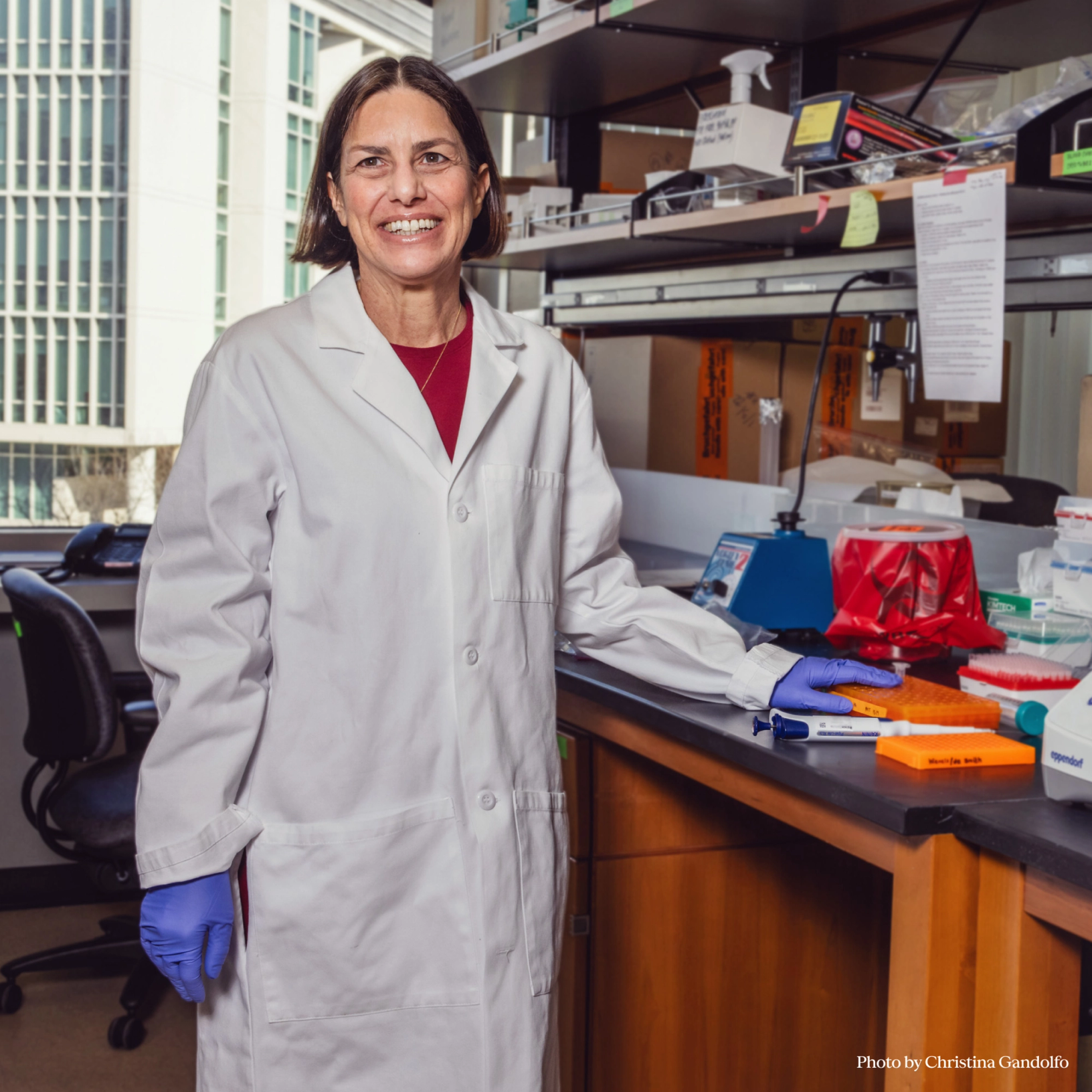

The EQT Foundation is supporting scientists to find cures to rare diseases. This profile of Marlena Fejzo looks at her work to tackle extreme sickness in pregnancy.
- USC researchers Marlena Fejzo and Emily Branham are developing a test to predict a woman’s risk of extreme morning sickness, with support from the EQT Foundation.
Marlena Fejzo spent years pinpointing the cause of extreme morning sickness after the debilitating experiences of her own pregnancies. Now that she has found a likely biological culprit, she is working on a treatment, and a test to identify the women who might need it most.
Extreme nausea and vomiting – known as hyperemesis gravidarum or HG – affects an estimated 1-3 percent of pregnant women and is the most common cause of hospitalisation in the early months of a pregnancy. Sufferers experience excessive morning sickness that can last up to childbirth. Currently, treatment typically involves anti-nausea medication, psychological support and hospital admission to receive essential hydration and nourishment by a drip.
“It was torture,” recalls the University of Southern California professor, of her experience of HG in the late 1990s. She was admitted to hospital twice to receive fluids during her first pregnancy. In her second, the sickness was so severe that she lost her baby during the second trimester. She went on to have twins who were carried by a surrogate.
“I started looking into what was known about it, and there was very little,” she says. “So, I decided that I was going to start working on it to hopefully find the cause, which, finally, I mostly have.”
Pinpointing the causes of HG
During more than two decades of research, Fejzo and her collaborators uncovered a likely genetic driver of HG and went on to figure out why a hormone called GDF15, produced by the placenta, makes some people far sicker than others.
They found that severity of the nausea depended mainly on two things: the amount of GDF15 produced by the placenta and the mother’s past exposure to the hormone. Women who had unusually low levels of GDF15 in their bodies prior to becoming pregnant were more likely to feel sickened by the hormone once its levels spiked during pregnancy.
That discovery has raised the possibility that HG could be prevented. If women with low levels of GDF15 are exposed to more of the hormone in a controlled way prior to pregnancy, their brains may develop resistance to its nauseating effects.
That’s the idea behind a trial currently underway to investigate whether metformin — a drug that boosts the body’s production of GDF15 and is already commonly used in pregnancy to treat conditions like gestational diabetes – reduces the risk of developing HG if taken before conceiving.
Developing a test
The trial focuses on women who’ve previously had HG. But Fejzo wants to ensure that any successful treatment would also be available to first-time mothers at high risk of severe sickness.
With a €100,000 grant from the EQT Foundation, Fejzo and her collaborator Emily Branham are developing a test for predicting a woman’s risk of developing HG, by looking for clinical factors and biological clues that can be found in the blood.
Women’s health research is chronically underfunded. As of 2020, only 5 percent of global research and development funding allocated to female-specific conditions. The EQT Foundation’s science grants are designed to accelerate bold scientific ideas with high potential for real-world patient impact, supporting translational research that might be overlooked by traditional funders.
If metformin is proven to cut the risk of HG, then a pre-pregnancy test could help figure out which women ought to receive it. In any case, foresight of HG risk would equip women to prepare for a potentially difficult pregnancy. They could take practical steps, such as hiring help, and feel more clinically supported by visiting an HG specialist at an earlier stage.
Although the metformin approach is still experimental, it is already making a difference to some people’s lives. A woman in Spain who’d had several terminations because of HG had a successful pregnancy after taking metformin, Fejzo says.
“They sent me a very heartfelt thank you, and photo, and told me that the hospital is going to start using that approach as the standard of care for people with a history of HG,” says Fejzo. “So, while we must await the trial results, that was very rewarding.”

ThinQ by EQT: A publication where private markets meet open minds. Join the conversation – [email protected]




Exclusive News and Insights Every Month
Sign up to subscribe to the EQT newsletter.