

The Consolidation of Our Industry Will Continue, EQT's Per Franzén Tells Bloomberg
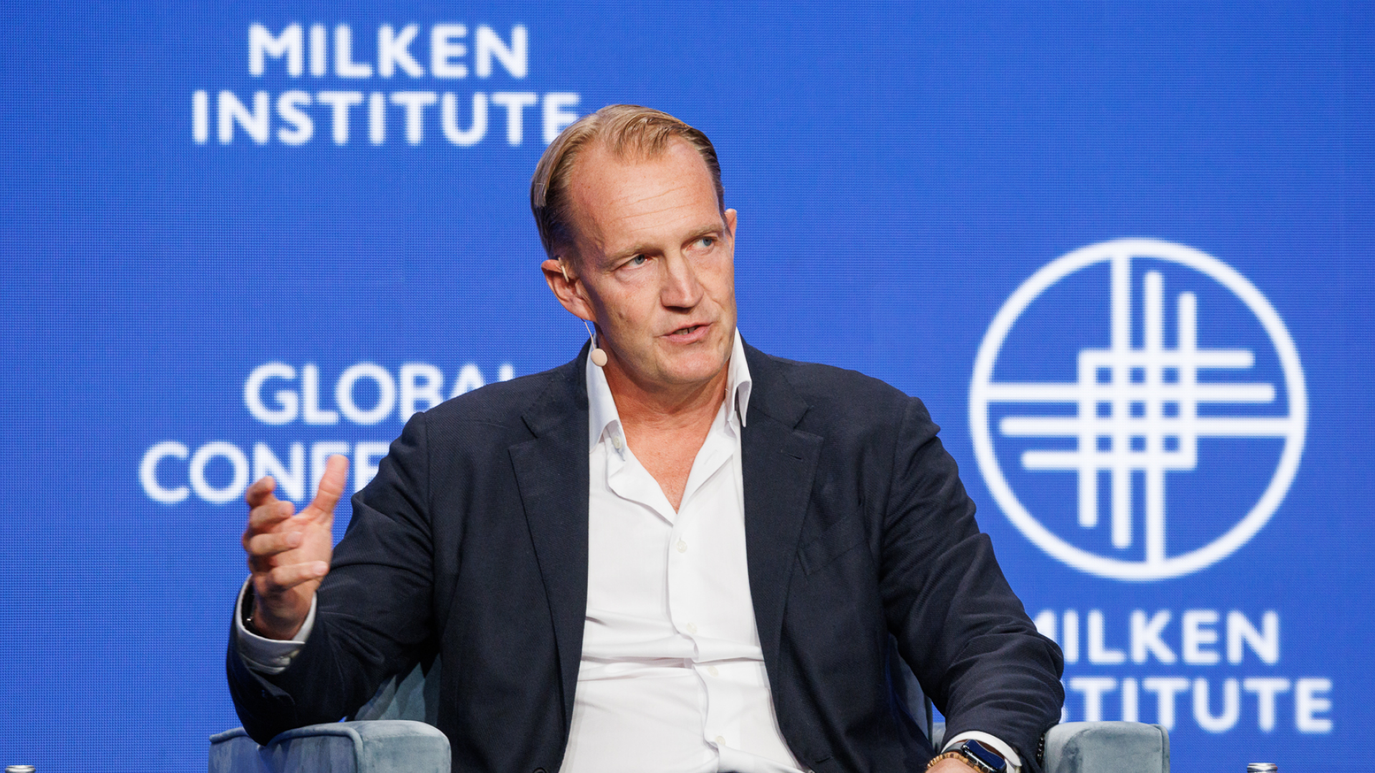
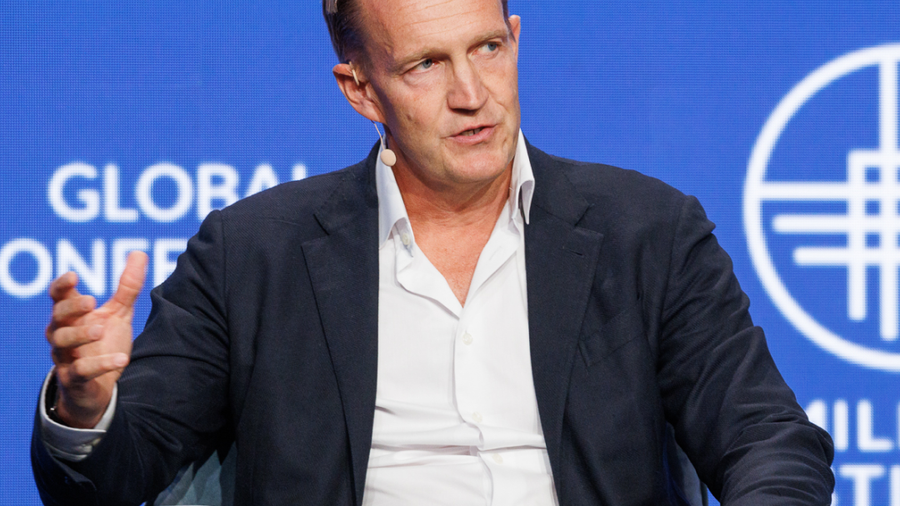

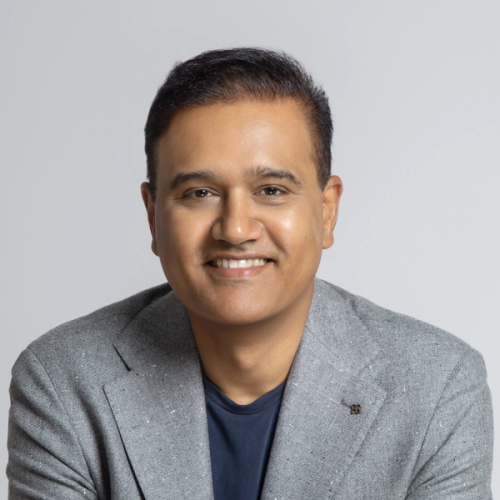
EQT CEO Per Franzén spoke with Bloomberg’s Dani Burger at last week’s Milken Institute Global Conference.
- Almost every business is currently thinking about how to build their internal AI capabilities, EQT CEO Per Franzén told Bloomberg in an interview.
Per Franzén sat down with Bloomberg’s Dani Burger at the Milken Institute Global Conference in Los Angeles on the one-year anniversary of his appointment as CEO of EQT. Find a transcript of the conversation below.
Dani Burger: How’s the last year been?
Per Franzén: It's been a busy year, but I think it was a good year for us. We stayed disciplined in our investment pacing. We actually had a record year of exits. We sent back €34bn ($40bn) to our investors. And as a result, we made good progress also on our fundraising agenda, and also on some of the strategic priorities that we set ourselves. We acquired Coller Capital, of course, and – fun anecdote – it's actually exactly a year ago that I met Jeremy Coller for the first time here at Milken. And so we had a little bit of a celebration, Jeremy and I.
DB: Well now I’ve got to ask, who have you been talking to this year that you're going to be buying?
PF: The nice thing with Milken is that there's all the relevant investors here, the key players in the industry. And it's really just always a great time to engage with everyone – and I'm doing that this year as well.
DB: Just on that note, you've taken on this big acquisition. That was really fascinating. It makes sense: get access to secondaries. We've talked about this before, other areas you’d want to add. Anything kind of popping up? Anything of interest at this moment? Especially as the wider industry kind of feels more stressed. Are there more opportunities right now perhaps?
PF: I definitely think that the consolidation of our industry will continue and probably accelerate given the environment that we're in. There's a number of factors driving that. If I look at our platform, after Coller we're just really well set up to capture the growth opportunity ahead for the private markets industry. Of course, here in the U.S., we're still – relatively speaking – small. And if I look across our four business-line strategies that we have today – private capital, infrastructure, secondaries and real estate – the area where we're still, relatively speaking, small is in real estate. We've been fairly narrow in our thematic focus so far in real estate, really, focused on the logistics segment. So that could also be an area where we could grow through acquisitions going forward, here in the U.S.
DB: I actually heard from someone yesterday that likely the consolidation is starting to happen. Not at your giant level, but maybe one tier under – unlisted funds who want to come together that they need to be a platform like EQT to survive. Do you think that's the new reality that we're in, that some of the bigger-but-not-as-big-as-you players need to come together? They need to form a platform or else they can't compete with the EQTs of the world.
PF: I do think that that's a trend across sectors – and also in the private markets industry. AI, I think, is also fueling that. And businesses across industries just need to invest into their AI capabilities and it requires a certain scale to do that. And also a certain scale to be relevant for the key players in the ecosystem. At EQT we have that scale and we can invest into our value creation capabilities across strategies and across geographies. So that is definitely also a trend that I expect will continue more broadly across the industry.
DB: How much of that also just gives itself to a new world that we're living in of what's attractive for companies and how we judge valuations? Because it used to be asset light, really high margins and high cash flow. And now all these companies realize, okay, well with this task of AI, I need huge access to compute. AI infrastructure is interesting. I know EQT is very active there. Are we kind of in a new world in terms of what makes for an attractive company?
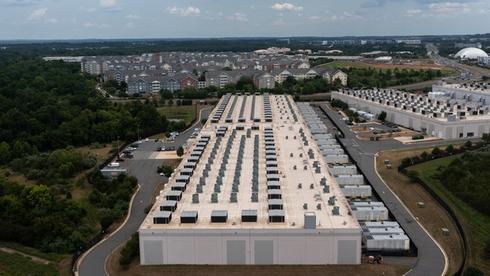
PF: Definitely. I think business models are transforming are changing across industries. Also for our own industry, across the firm, across strategies, we really want to be invested in the AI trend. And we're just ideally set up to do that. Also in secondaries now, given some of the AI-driven disruption that we're seeing in the private markets industry, also in private credit, we can invest into that now out of our secondaries strategies. And of course in infrastructure – you mentioned that – at the AI infrastructure level that is really where we see very attractive risk-reward, because of this huge demand-supply imbalance, and demand for AI compute being so high. It's very unlikely to change, in the short term. And that's really also what we're investing into out of our infrastructure strategy. We own one of the largest data center platforms in the world, called EdgeConneX. We're also a big investor into energy. And of course access to energy is one of the bottlenecks in terms of the build out of AI infrastructure.
DB: Have these platforms fully passed along the cost of energy to companies, to portfolio companies? Is there a risk that we go through a period of high margin compression for AI-using companies and the cost getting passed to them in terms of bottlenecks and energy? Because at the moment the big platforms aren't exactly passing along all the costs.
PF: I do think that every business in most industries is right now thinking about how do they, set up their own internal processes, their governance, how do they build their internal AI capabilities to be able to also get the return on all of the AI-related investments that they're making long-term? And so that's a focus for most of our portfolio companies. We – as an active owner – we make sure that all of our portfolio company management teams are really AI-centric and have that return on capital employed and also invested into AI and AI compute top of the strategic agenda. That's also how I'm running EQT, my own firm.
DB: Have you partnered with any of the big foundational models? I feel like every day we hear some story of, you know, Google or OpenAI. Have you had those discussions at all?
PF: We've been investing into our internal AI capabilities at EQT for the past decade or so. We then make sure that our portfolio companies have AI-centric CEOs that then can leverage our own internal AI capabilities. But of course, we also need to make sure that we have access to the best external capabilities. And we have the scale necessary in our industry to be relevant to all of the large language model providers and everyone else that can provide us with those AI transformation capabilities. And we constantly have dialogs, discussions and we might also formalize some of those discussions into more formal partnership agreements that we might announce going forward.
DB: When you see your own internal capabilities, is that like your own internal LLMs that you've developed?
PF: We have an in-house team of more than 50 digital experts – AI data scientists – that are working closely with the investment organization, and our portfolio companies, to help them drive AI transformation.
DB: So you don't necessarily need the forward-deployment engineers at the moment from these big companies because you're like, “I got the experts”. Is that the thinking?
PF: We have some of those experts in-house. But, of course, given the size of our portfolio and the scale of transformation that's happening, we also want to make sure that we have access to those external capabilities.
DB: You said there might be announcements to come on partnering. How do you evaluate who the best partner is? Because it feels like this weird horse race, where maybe OpenAI is better. Oh, actually, Anthropic has more advanced models. How do you decide who to put your fortunes with?
PF: That's precisely why it's important that you also build your own, internal AI capabilities. And that's why we believe it's also important that you have access to a diverse set of external capabilities and not only bet on one horse, so to speak.
DB: So you mentioned you have more access to private credit now, with the Coller acquisition. The fears around there have been squarely around wealth products. And I realize this is a very different flavor from the BDCs, the fears. But you did launch a retail infrastructure fund very recently in Europe. Again, a very different flavor from what's going on. But I wonder if you kind of thought about this idea of what is appropriate for retail investors as you launch funds for this? Do you think that there's been some missteps by this industry as a whole in what they've kind of been marketing to more retail-oriented investors?
PF: This is of course a very, very important strategic topic and discussion for us internally. We believe it's a good thing to give private wealth and retail investors access to the value creation that's happening in the private markets. The share of the value creation and the global economy that's happening in the private markets keeps on growing. So per se that's a good thing. But of course, it's very important that you design those products in a responsible way so that you can maintain the same underwriting standards as you have for your institutional products. Also for that part of the industry and – most importantly – that you also market and sell those products in a responsible way. So, if I were to make one prediction for, for the industry and in particular for private credit, is that the vocabulary, the word “semi liquid” is going to disappear. These products are illiquid, right. And it's just very important that we're transparent about that.
DB: I've heard stories at this Milken of family offices using some of these funds as cash management when they're squarely not. Who does who does the blame lay with? Is it the advisors? Is it the funds for calling them “semi liquid”? Where did we go wrong that that dynamic happened?
PF: I really think it's the responsibility for all players, all stakeholders in the industry: the private markets players, ourselves – but also the distribution partners, the banks, everyone else that is really involved in distributing these products.

ThinQ by EQT: A publication where private markets meet open minds. Join the conversation – [email protected]


Exclusive News and Insights Every Month
Sign up to subscribe to the EQT newsletter.