

How Does Private Equity Work?



A beginner’s introduction to the not-so-public investing sector
- Private equity firms identify and invest in private companies using money raised from investors.
Thirty years ago, private equity firms were just a niche subsector in the financial industry. Now, they’re a cornerstone of institutional investors’ strategies.
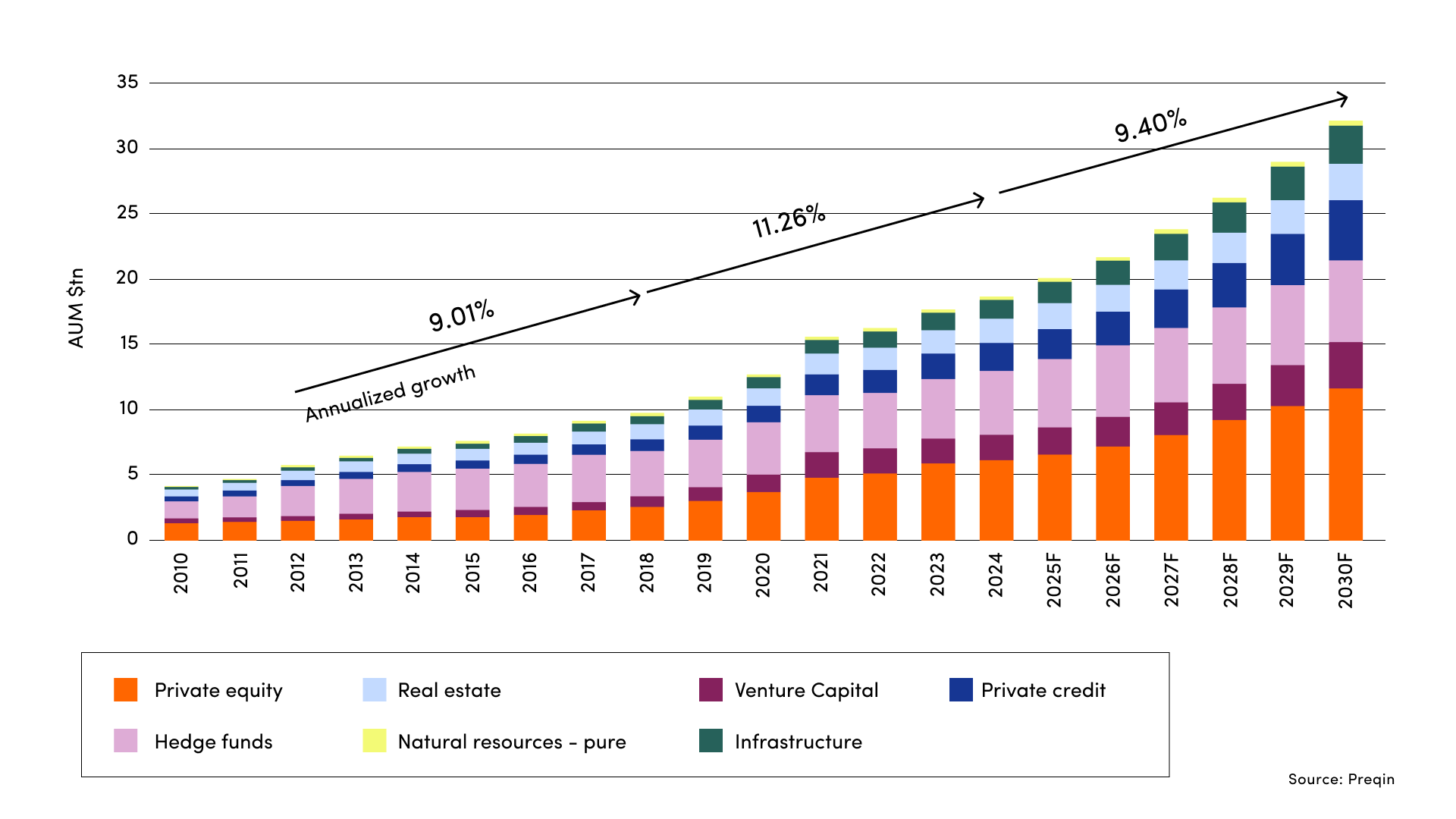
By 2025, private market firms held more than $22tn in assets under management. That number is set to exceed $30tn by 2030, according to Preqin. Driving this interest has been a track record of often outperforming public markets, supporting the argument that privately held businesses can be managed more efficiently than publicly listed ones.
Essentially, PE firms identify and invest in private companies using money raised from investors. PE firms create fund structures through which the money is deployed. Unlike public companies, private companies typically have a smaller set of shareholders, making it easier for PE funds to buy either a significant stake or the entire business. PE funds sometimes also make bids to acquire listed companies in take-private deals.
Such deals span the full universe of business sectors with many PE firms specializing in particular industries, such as technology or healthcare, aiming to demonstrate to investors their expertise and ability to turbocharge corporate growth.
Private market assets under management by sector
Investment process
Private equity funds are focused on achieving capital gains through increasing shareholder value. The success of any private market investor’s efforts depends, at least partly, on the potential of the target company. Private equity firms employ deal teams to scour the market looking for potential acquisitions. These can be either standalone businesses or divisions of a larger conglomerate.
Private equity firms use a range of techniques to produce returns for their investors. Some of the most common include:
- Management changes as senior staff are replaced and/or more experienced talent brought in. A company’s board will also change, with senior members of the PE firm’s deal team often added.
- Balance sheet refinancing, which often involves taking on debt as part of the acquisition process.
- M&A and market expansion with financial support sometimes provided by the PE fund to help a company expand into new products and markets.
- Investment in innovation and technology can be a key driver for growing a firm’s revenue and market presence.
- Carve-outs as units deemed unrelated to a target company’s core focus are sold.
An analysis of EQT’s private capital portfolios found that the single largest creator of value is growing a company’s sales, a strategy that sometimes requires:
- Refocusing a firm’s operations.
- Challenging the status quo to maximize growth.
How EQT Generates Returns From Portfolio Companies
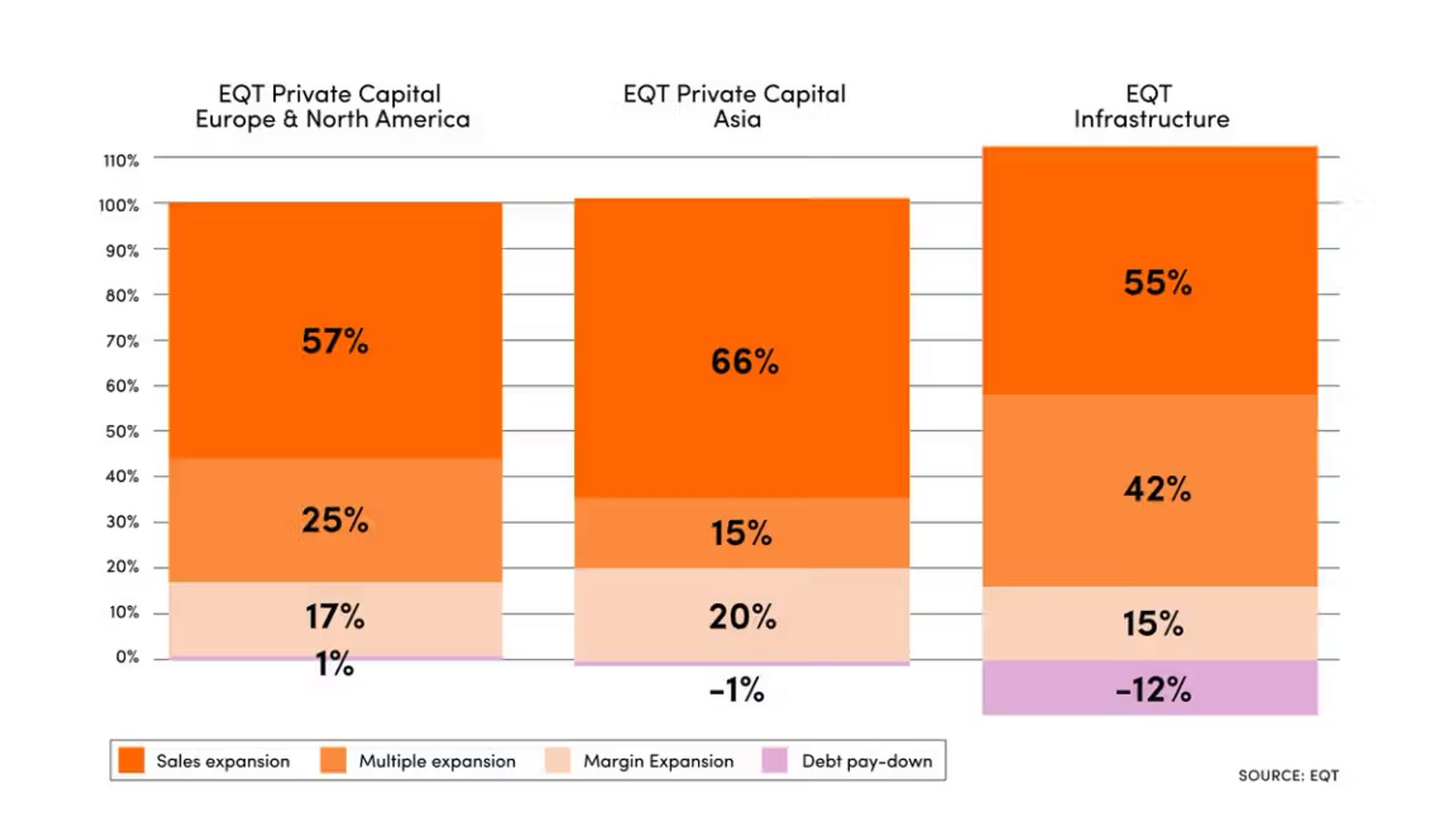
This approach gels with PE’s ownership model. Whereas a public company listed on the stock market is held accountable to its shareholders every quarter, private capital’s investment style allows for a long-term approach, giving company management the time to make major adjustments in strategy and operations.
Returning Capital
Fund portfolio companies are held on average for six-and-a-half years before being sold, according to McKinsey. Preparing the sale process is a crucial part of any investment strategy, and investors expect a range of exit options to attract the best price. Common strategies can include:
- An initial public offering (IPO) whereby the company lists its shares on a public stock exchange.
- A trade or ‘strategic’ sale, through which the company is acquired by another entity.
- A secondary sale, whereby a private equity fund sells its holding in a company to another private equity firm or institutional investors.
- A management buyout, which – as the name suggests – sees private owners sell the company back to management.
- Liquidation, when private equity investors determine that the business is no longer financially viable or has reduced return potential, choosing instead to wind it down and sell off its assets. This is usually a last resort, and investors may not recover their original investment.
Investors expect to see a steady flow of returns as companies are bought, revamped and then sold. The prospects of lucrative returns and mild public market correlation pull investors toward private assets. Specifically, institutional investors such as pension funds, as well as ultra-high-net-worth individuals, invest heavily in the private realm.
In recent years, the number of private equity funds available to retail investors has increased. When investing in private equity, it is important to remember that private investments are long-term in nature, and there’s little opportunity to redeem holdings before the private equity fund sells its portfolio companies.
It’s also important that investors choose a reputable private equity firm, as the team’s expertise, experience, and resources could make the difference between success and failure.

ThinQ by EQT: A publication where private markets meet open minds. Join the conversation – [email protected]
On the topic ofWealth