

How Leading AI Startups Are Winning Over Top-Tier Talent



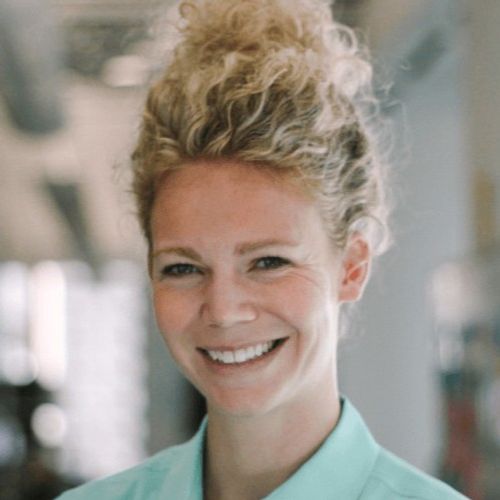


Laurabeth Harvey, Polly Barnes and Shawna Wolverton are the operating partners within EQT’s early-stage tech platform. They explain how operators at many AI companies – including ElevenLabs, Synthesia and 1X – are attracting world-beating talent.
Ask today’s top AI founders and they’ll tell you that the future is promised to no one. It has to be earned.
This mood of uncertainty is pushing startups to move faster than ever. And while the rush towards the future is, of course, showing up in the technology they’re using, it’s also driving how companies are building their teams.
As the operating team for EQT’s early-stage investing arms – Ventures and Growth – we’ve spent considerable time inside the AI startup ecosystem. A clear picture is emerging: many companies are completely rethinking their talent operations, and it starts with how they hire.
Non-traditional talent profile
The startups pulling ahead are abandoning the old playbook for tech talent and looking in unusual spots.
At 1X Technologies, a builder of humanoid robots backed by EQT, this means interviewing maritime rope engineers and polymer scientists who are first-principles thinkers, says head of talent Brian Bocchino. This philosophy is shared at UK-based self-driving startup Wayve, where chief people officer Emma Baillie has been hiring ex-armed forces, automotive experts and former driving instructors.
“It’s probably the people that don’t fit into Microsoft or don’t play by the rules – or they color outside the lines,” Baillie says. “We are looking for a culture add, not a culture fit.”
“Founder energy”
Startups aren’t shying away from previous and aspiring founders either; they are welcoming them. High-founder-density teams are becoming a hallmark of strength in the ecosystem. To move at speed, founders are seeking hires who are autonomous, comfortable with ambiguity and decisive, traits ex-founders often carry by default.
“We explicitly hire previous founders. It’s such an important part of our culture that ‘founding’ is in our job titles. We need people who’ve done zero-to-one before and won’t need to be told what to do,” says Ed Steele, founding operator at AI job search tool Jack & Jill, which has a 16-person team that includes 10 ex-founders.
“We hire operators who are T-shaped generalists, individuals with deep expertise in one area and broad knowledge across multiple related disciplines, and give them autonomy to own the full lifecycle – from first customer interest to successful adoption – with a hand in all the product building in between,” he says. “If that’s all in one person, it’s so much faster.”
There’s been a fundamental shift in how founding teams think about authority. The founder is no longer a singular figure that sits atop an organization; the founder mentality is distributed throughout the startup, with individuals given the autonomy to make key decisions, eliminating top-down bottlenecks that slow everything down.
With AI tooling handling increasingly specialized tasks, having broad knowledge and a willingness to be hands-on across product management, engineering, release management and go-to-market is much more coveted than deep expertise in a singular area.
"What's more important than the domain expertise is the builder capability," says Laura Gonzalez, chief of staff at AI video platform Synthesia. “With AI, anyone can gain expertise in anything very quickly, but building a process that scales, that’s a builder mentality.” Her test is simple: ask someone what they specifically built. “The builders will have answers and the non-builders won’t.”
Sana Labs, an AI startup focused on knowledge work, which Workday recently acquired for $1.1bn, focuses on hiring for “infinite” skills like curiosity and creativity, the kind that can transfer across every role.
“It’s very easy to over-index on those finite skills,” says Olivia Elf, head of operations at Sana Labs. “The majority of our sales team had never done sales, for example, because we believe that it is a much more finite skill.”
Missionary or mercenary?
Startups have always required believers: talent willing to bet on a company that doesn’t yet have much to show beyond conviction and a roadmap. In the current AI gold rush, that need has never been higher. Early hires at AI-native companies are being asked to work harder than they ever have, for equity that may never materialize, at companies where the odds are not in their favor. Mission and culture aren’t just nice-to-haves in that context, they’re the primary case for joining.
“I’m not looking for people to come here, help us get the factory up and running, get a 10x, and then bail out so they can go somewhere else,” says 1X’s Bocchino. “I want people who are gonna be here for the 100x.”
That doesn’t mean compensation is an afterthought. It means that, in a market flooded with opportunity, the candidates worth hiring are the ones who understand the full equation. They know what they’re signing up for, believe the upside is real, and are energized rather than deterred by the uncertainty. “Conviction is the thing that allows you to push hard when times are hard,” Bocchino says. He has walked away from candidates who seemed to be optimizing for the package alone – not because compensation doesn’t matter but because, without conviction, the package is all there is.
ElevenLabs, an AI-powered voice generation startup, screens for this by making culture central to the hiring process itself. The company examined its core values, translated them into specific human attributes, such as ambitious and humble, and built them into a rigorous filter applied at every stage. “It is much easier to bring in people that carry the culture, and much harder to train each incoming person on what the culture is and make them shift in the right direction,” says Victoria Weller, who oversees operations at ElevenLabs.
The role of compensation
Vibe coding platform Lovable’s recent commitment to giving each employee a 10 percent raise on their work anniversary signals a quiet, but important, shift in how startups are thinking about compensation more broadly. It’s become a retention mechanism rather than a hiring weapon.
“This is a proactive move to make sure our employees are compensated for the contributions we think will compound over time,” says Maryanne Caughey, chief people officer at Lovable. “We want employees focused on doing the best work of their life, rather than re-proving their worth or managing optics.”
Lovable is transparent that it uses data from Pave, a compensation platform, to target paying in the 90th percentile of an employee’s market value based on their role and location. Radical transparency surrounding compensation is a savvy move that mitigates getting caught in a talent war. Employees know exactly what they are signing up for, while managers focus on customer problems rather than fielding counter-offers and pay conversations.
In a market where every AI startup is promising the future, the ones pulling ahead aren'’t winning on technology alone. They’re winning because they’ve figured out how to hire people who compound capability with every passing month. They are builders who don’t need to be pointed at a problem to go solve it. The gold rush will sort the fortune hunters from the true believers soon enough. Many of the best hiring teams aren’t waiting for that to happen.
Laurabeth Harvey joined EQT Partners in November 2024. Laurabeth brings over 18 years of GTM experience in tech. Her tech career started at LinkedIn where she saw extensive hypergrowth through seven years at the company, building and scaling the first SDR/BDR organization and then leading all of North American sales for LinkedIn talent solutions at the end of her tenure. Laurabeth then ran various GTM teams at three start ups - Intercom, Front and Lattice where she oversaw sales, success, operations and in the last two organizations marketing. She loves scale ups: building sustainable processes as well as building world class teams. Laurabeth holds a degree in English and Political Science from Colgate University.
Polly has spent the past 15 years as a Chief People Officer modeling and encouraging the human capabilities that deliver results in high-growth cultures. Enabling businesses to make more objective and impactful people decisions and building people teams and strategies from the ground up. She has worked in-house at global board level and as a consultant to Y1 start-ups. Assessed, hired and coached founders of three-person companies and CEOs of 3000-person companies; strengthening the C-Suite to scale businesses across four continents and over 30 markets. Within EQT Ventures Polly helps our portfolio companies increase speed and avoid de-raliers at each stage of their growth. Her passion is for proving the value-add contribution of the people and talent teams with data and helping Founders decide where to invest their efforts to build great cultures, fast.
Shawna Wolverton joined EQT Partners in February 2026. Shawna brings over 25 years of product experience in tech. She started her career in the dot com era where she saw the dawn of the SaaS revolution. She spent 14 years in various product leadership positions at Salesforce as the company grew from 300 to 30,000 employees. She was the Executive Vice President of Product and Design for 4 years at Zendesk and spent nearly four years as Chief Product Officer at Benchling, building software that helps teams on the cutting edge of science optimise and record their drug discovery workflows. She loves the complexity of enterprise software, great design, and building teams that build great products. Shawna holds a degrees in Political Science from the University of California, Santa Cruz.

ThinQ by EQT: A publication where private markets meet open minds. Join the conversation – [email protected]




Exclusive News and Insights Every Month
Sign up to subscribe to the EQT newsletter.