

René R. Kuijten: Turning Scientific Breakthroughs Into Novel Medicines
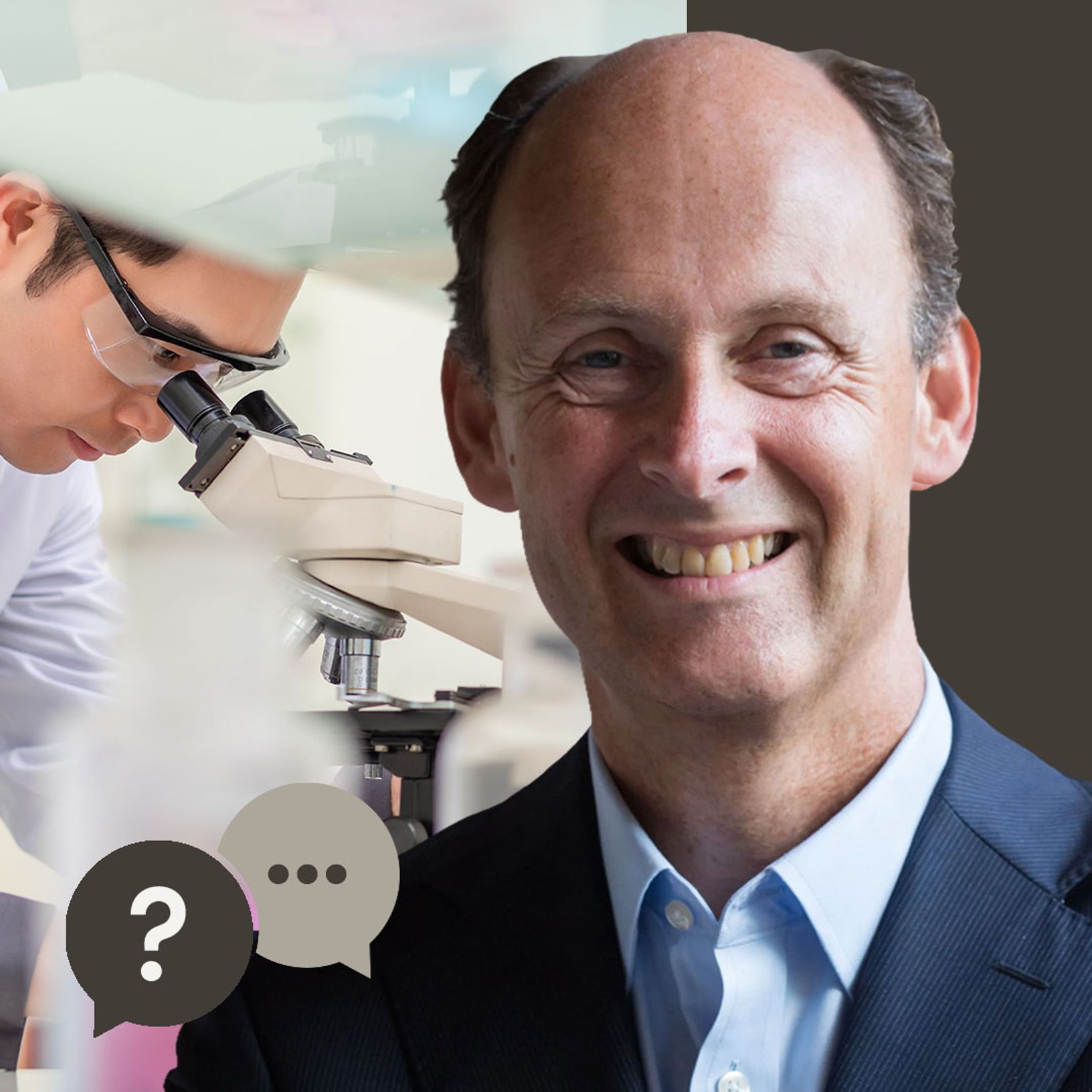

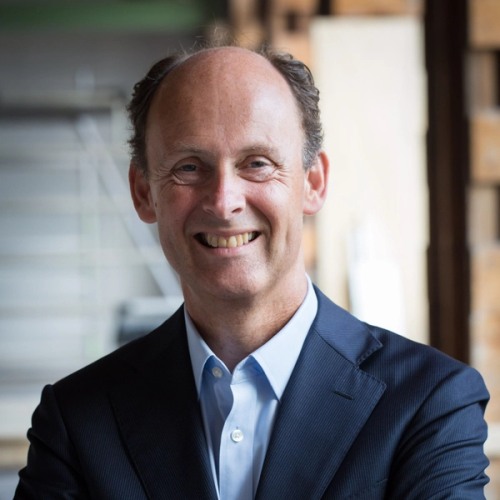
The head of EQT Life Sciences discusses his team’s strategy to build long-term value and help biotech companies turn promising ideas into breakthrough medicines.
Developing new medications takes time. Investing in them requires the same long-term view. Today, as partner and head of EQT Life Sciences, René Kuijten works alongside companies as they translate scientific ideas into novel treatments. In an industry defined by risk, long timelines and scientific breakthroughs, he reflects on how value is built.
Long-term impact
“My father was a pediatrician, and I was raised with a focus on helping patients from an early age. After completing my medical degree, I did a PhD in pediatric oncology in the U.S. I began to feel a strong desire to make a larger impact. McKinsey was looking for physicians, so I decided to give it a try. I planned to return to the hospital with broader knowledge. I actually enjoyed the consulting work more. But I also realized that projects are brief. That’s when I met Martijn Kleijwegt, who had founded Life Sciences Partners (LSP), now EQT Life Sciences. He discussed investing in life sciences companies and building long-term value, an idea that resonated with me. I took the biggest step of my career, moving from a large, tightly-organized firm to a small team.”
2,000 Potential Investments
“At the start, the fund was small, about €25m. I joined with the second fund, which totaled about €100m. We continued to grow, raising larger amounts along the way. We’re involved in companies for around five to eight years – a long commitment. Venture capital is fundamentally about business development. It involves carefully thinking through how we can help scientists transform a promising idea into a medicine and successfully bring it to patients and the market. That concept still drives me. We review about 2,000 potential investments a year. In the end, we select about five.”
Entrepreneurial approach
“Biotech covers almost every disease you can think of, from oncology and cardiovascular disease to rare conditions and even individual gene mutations. We invest across the spectrum, including drug development and medical technology, such as minimally invasive surgery and faster diagnostics. Over time, we noticed insurers were actively seeking technologies to reduce healthcare costs. It was a hot theme then. It’s even more important now. As one of the more entrepreneurial venture groups, we decided to set up a medtech fund in collaboration with insurance companies. We are making a tangible impact on cost reduction, and we’ve now raised the third fund in this strategy.”
Accelerating dementia research
“We also noticed that dementia had become an enormous topic. However, in Europe, most venture firms lack the necessary expertise. A turning point came when I ran into Philip Scheltens, a professor at Vrije Universiteit Amsterdam and a leading authority on dementia. That kind of real expertise helps attract other partners who might otherwise be hesitant to participate. With our dementia fund, we successfully raised €273m, but we’ve mobilized around $1bn. That is a meaningful step. There are many risks involved, and still very few treatment options available. In terms of research, dementia is comparable to oncology 20 years ago. Dementia is made up of many different diseases, each with specific biomarkers that help identify its type. The field is advancing rapidly, with more drugs getting close.”
Middle stages
“Drug development is often said to take 20 years end-to-end. We've built deep expertise in the five to seven years in the middle, where value creation is greatest, and the work is most complex. We invest from early to later stages, across biotech and medtech. That breadth is relatively unusual and gives us a broader view of risk and opportunity. Also, EQT Life Sciences is part of EQT, a private equity group that allocates a significant share of its capital to healthcare. Venture capital focuses on startups; PE on mature businesses. Being part of that platform gives us insight into what happens later – commercialization, market shifts and where technologies like AI are heading. Some clinical trial providers and other partners our companies use are part of the EQT network, so insight flows both ways. We see early innovation; they bring scale and operating experience.”
Global perspective
“Being part of EQT also supports our geographic expansion. We are among Europe’s largest life sciences investors, and with EQT, we want to strengthen our presence in the U.S. and Asia. American investors increasingly know us. In markets such as China, Japan, Singapore, and South Korea, there is strong science and capital, though expansion requires a local presence and takes time. EQT’s global network helps. Within EQT, we operate with a venture model that complements the firm’s broader private equity approach. Where private equity typically takes control positions, we invest as minority partners in developing companies that are often still pre-profit. That allows us to maintain an entrepreneurial mindset, while giving us the backing of a global platform.”
Moving forward
“We’ve been able to build value over time. In the past two decades, each of our core funds roughly doubled in size. Ultimately, it's a team effort. We pair an entrepreneurial, pragmatic culture with individual responsibility. Many partners have been with us for more than 20 years. When it comes to the Dutch ecosystem, we’ve worked with universities, the government and seed investors to strengthen the early stages of product development and company creation. I was honored to receive the Frans Banninck Cocq Medal from the city of Amsterdam, recognizing our contributions, including the launch of the Oncode Institute, which brings cancer researchers together. The bridge between academic discovery and investable companies is much stronger today.”
René Kuijten is Head of EQT Life Sciences and Partner at EQT since 2022. Rene was Managing Partner at LSP from 2001 until 2022, when LSP joined forces with EQT and was renamed EQT Life Sciences. René is currently also a.o. Vice Chairman of the Supervisory Board of Oncode Institute which he co-founded, and he advises the Dutch government on life sciences policies through HealthHolland. Prior to LSP, René was senior consultant for 8 years at McKinsey & Company and co-leader of their European Healthcare Practice. Furthermore, he served on the board of the Dutch Private Equity and Venture Capital Association (NVP) for 12 years. René obtained his MD from Utrecht University; his PhD from the University of Amsterdam on research performed as a WHO fellow at the University of Pennsylvania; and his MBA from INSEAD in Fontainebleau.

ThinQ by EQT: A publication where private markets meet open minds. Join the conversation – [email protected]
On the topic ofHealthcare




Exclusive News and Insights Every Month
Sign up to subscribe to the EQT newsletter.