

Why EQT and the ATP Share the Belief That Better Never Ends
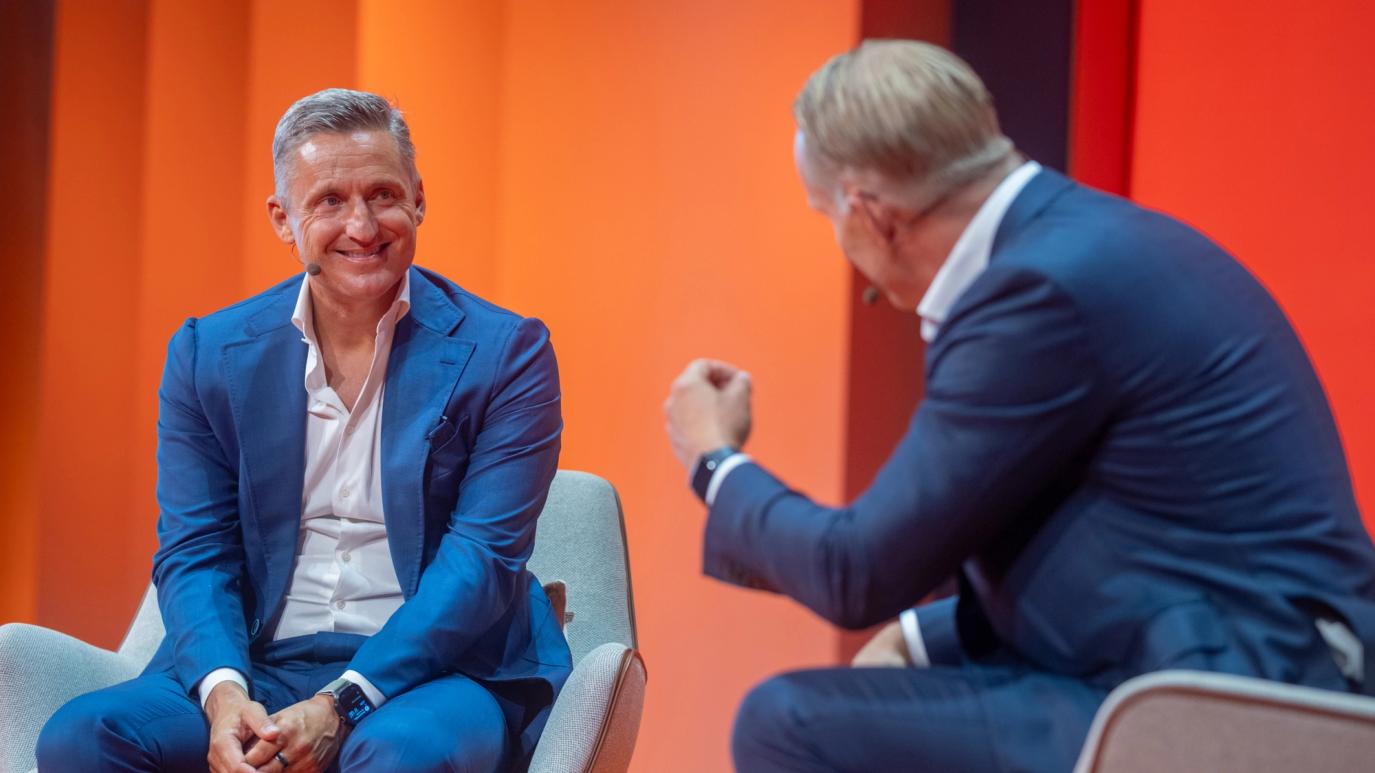
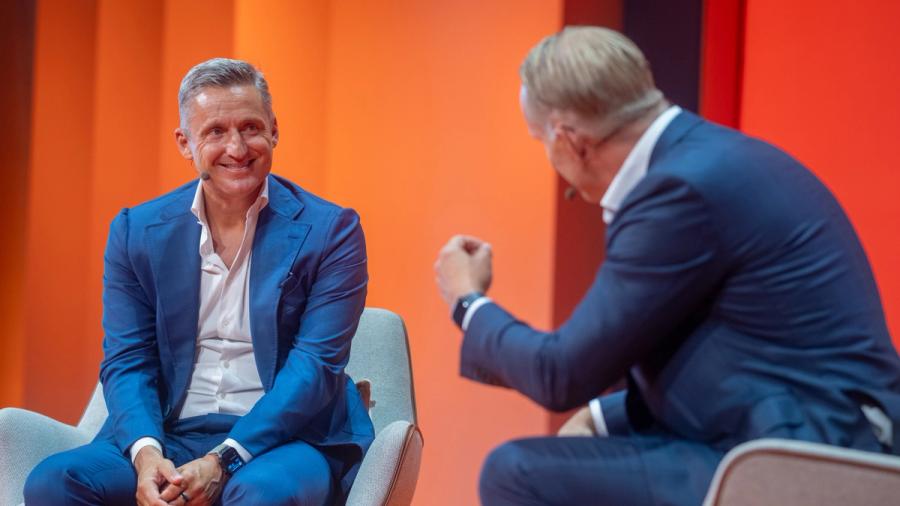

EQT CEO Per Franzén and ATP Chairman Andrea Gaudenzi discuss why tennis and private markets have so much in common.
- Tennis is a sport where you never stop pushing in the pursuit of better, which makes it a perfect match for EQT.
EQT has been built on one belief: everything can be improved, everywhere, at all times. Simply put: there’s no limit to better. This belief has driven every decision we have made since our earliest days, for the companies we back, for our clients, for the communities we work within and for ourselves.
After EQT this month announced a partnership with the ATP, the governing body for men’s professional tennis, our CEO, Per Franzén, sat down with ATP Chairman Andrea Gaudenzi to discuss why tennis and private markets have so much in common. Here’s an edited transcript of their conversation.
Per Franzén: There are many things that make tennis great. It is not about a brilliant individual shot. It is the 10,000 hours that made that shot possible. It is the player who wins the first set and immediately looks for what they need to do better in the second. It is a sport where you never stop pushing and never stop believing in the pursuit of better.
That is the spirit of tennis. And it is the spirit of EQT.
This alignment is why I am proud to announce that EQT is the new Official Global Private Markets Partner and the Global Platinum Partner of the ATP Tour. We are the first private markets firm to partner with the ATP Tour. Over the next five years, this partnership gives us a global platform – every major market, hundreds of millions of fans – to show the world what EQT stands for.
Not just as investors. As partners who believe that better never ends.
At EQT, we believe that great results aren’t the finish line. They’re the product of constantly pushing ourselves, with the aim to create better outcomes for our clients. We’re proud of what we have built, and we don’t take it for granted.
But the pride never quite sits still. We always ask what we can do next. The result lands, and you’re already thinking about the next shot. The hardest thing about sustained improvement isn’t ambition. It’s what happens after great results – the temptation to protect what you have rather than continue raising the bar for what’s next. At EQT, we always choose the latter. How does tennis share that instinct?
Andrea Gaudenzi: Tennis believes in it the same way. And you can see it clearly in the players who desire more and who continuously improve their game. The ones who last are never quite satisfied with a win. A Grand Slam is not a full stop. They are already asking, “What could I have done better? Did I leave something on the court?”
The result lands – and yes, they feel it, they celebrate – but within hours the question changes to, “What more can I do?” It is what keeps the game alive for them.
And you see it in the sport itself. Tennis has had to make that same choice: between protecting what works and pushing into what’s next. The moments when the sport has been at its best are when it chooses to keep pushing forward. That is the only way a sport – or a firm or a player – stays relevant across generations.
PF: The conversation at EQT is never about the past It’s always about what more we can do. What the next iteration of a company could look like. What we could do better for clients.
I think that’s a choice as much as it is a belief. You have to decide to keep looking for it even when nothing is forcing you to. Does tennis make that same choice?
AG: Every day. And I think it is the only honest relationship you can have with a sport like this. Tennis keeps showing you what ‘more’ looks like.
Every generation of players finds something the previous one hadn’t quite spotted yet. A shot that wasn’t possible. A level of physical and mental performance that redefined what the sport could be.
And the remarkable thing is that it has always looked complete just before the next leap. People said the game had reached its peak with Borg, with Sampras, with Federer, Nadal, Djokovic. It hadn’t. It never has.
That is what I find myself thinking about most. Not what we have achieved but what the sport is still capable of. That question always gets bigger the closer you look.
PF: That’s exactly it. The closer you look, the bigger it gets.
We feel that at EQT constantly. Thirty years in, the opportunity ahead of us feels larger than it ever has. Because we understand better what’s possible. And the more you understand what’s possible, the more you realize how much is still left to build.
I want to ask you something more personal. We’ve talked about the pursuit of better as if it’s a clean, forward-moving sprint. And mostly it is.
But in 30 years of building EQT, the thing that has surprised me most is how often getting better has required us to question something we were already proud of.
To look at something that was working – genuinely working – and ask whether it was the best we could do. That needs a certain kind of mindset. Has tennis taught you anything about aiming for better that surprised you?
AG: Yes. That it sometimes comes from slowing down, not speeding up.
I spent my career trying to play faster, hit harder, cover more court. And the players who consistently improved the most – the ones who found new levels when others plateaued – were the ones who learned to see the game more clearly first.
Better technique. Better positioning. Better decisions. The speed came from that. Not the other way around.
I expected better to feel like acceleration. It often feels more like precision.
PF: Precision over acceleration. I feel that in how we operate at EQT.
The best decisions we’ve made haven’t been the fastest ones. They’ve been the ones where we took the time to truly understand something more completely – about a company, a market, an opportunity, a client’s goal.
That depth – the willingness to slow down and see something properly – that’s where the real edge comes from.
Last question: why does it never feel finished? The work compounds, the results follow, the conviction deepens. And yet the feeling of more never goes away. Should it?
AG: It shouldn’t. And I’ve stopped trying to make it.
Tennis keeps producing this proof, generation after generation. Every time the game looked complete, someone came along and found something no one knew was there. Borg, McEnroe, Sampras, Federer, Nadal, now Alcaraz and Sinner. Each one looked like the summit. But the sport keeps finding more because the people in it refuse to stop pursuing better.
PF: You refuse to let it be the last thing. That’s 30 years of EQT in one sentence.
We don’t always know what’s ahead. But we believe there’s more in it: more for the companies we back, more for our clients, more for what EQT can become.
The gap never closes. And, honestly, I wouldn’t have it any other way.

ThinQ by EQT: A publication where private markets meet open minds. Join the conversation – [email protected]

Exclusive News and Insights Every Month
Sign up to subscribe to the EQT newsletter.