
What Is a Vintage in Private Equity?

Ever heard the phrase ‘vintages’ and wondered what it means in relation to private equity?
- Vintage refers to the year that a private equity fund made its first investment.
Like a fine wine, the term ‘vintage’ refers to the year that a fund’s management team makes its first investment. The term is useful when comparing the performance of different funds.
As private equity funds invest in a portfolio of companies for many years, it is important to know a fund’s vintage, to do a meaningful peer-to-peer comparison. That’s because the timing of a fund’s capital investment will in-part impact returns due to broader macroeconomic conditions throughout a fund’s lifecycle.
For example, a 2008 vintage private equity fund could have bought distressed assets during the financial crisis and profited from their rebound, making a large return. By comparison, a 2019 or 2020 vintage fund may have bought companies just before a sharp rise in borrowing costs hurt valuations and made for a tougher exit environment.
The vintage of a fund is, therefore, a useful comparative point. It enables investors to better analyze the performance of different private equity managers by comparing funds that started investing around the same time. It also allows investors to compare how a private equity firm’s funds have performed vintage by vintage.
Average private equity fund returns by vintage
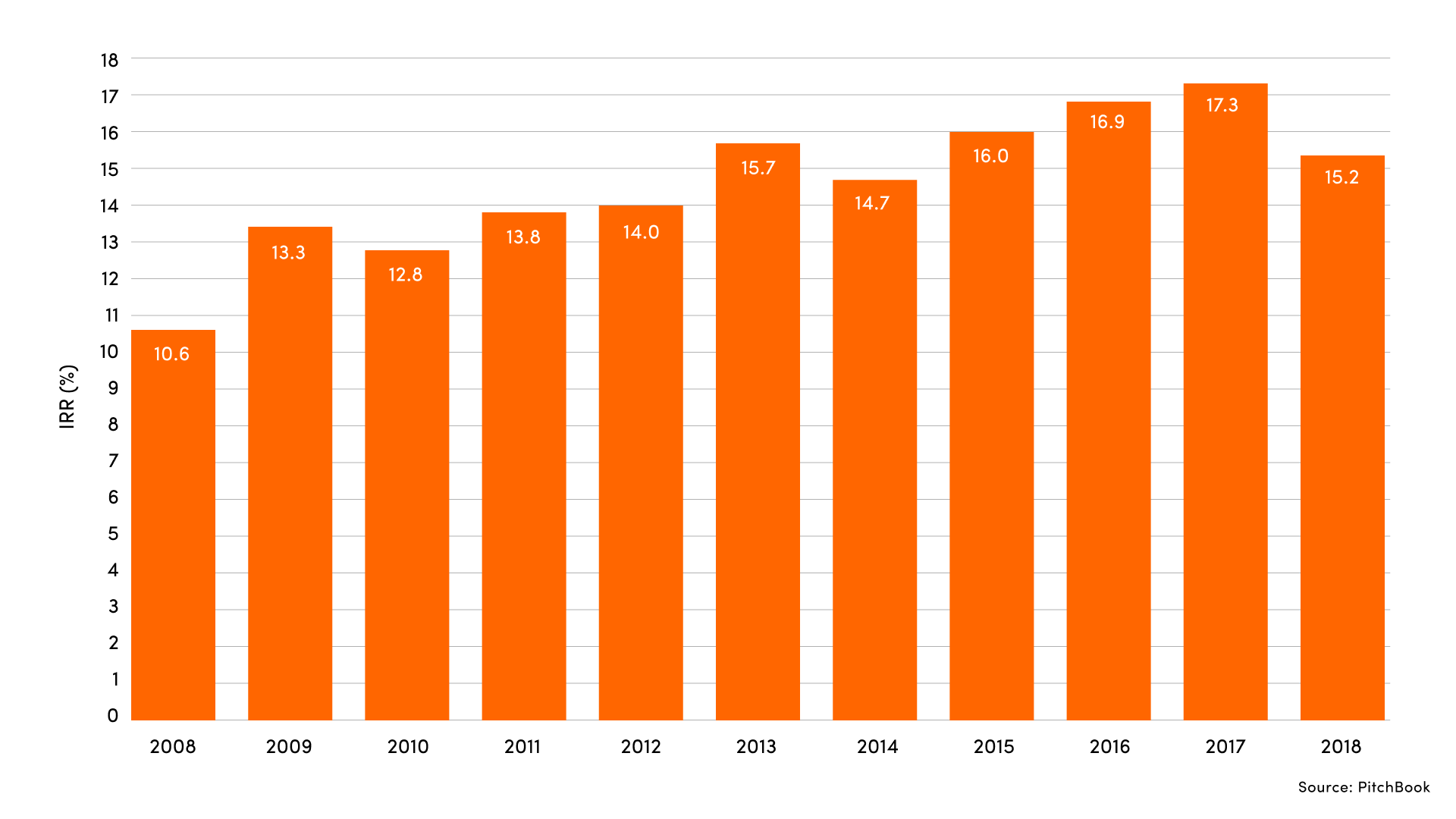
Regular investors in private equity, such as pension funds, tend to commit money every year, ensuring exposure to each new vintage. To use the wine metaphor again, it is not always clear how good a vintage will be until the fund has started to mature, so institutional investors like to keep a well-stocked portfolio cellar.

ThinQ by EQT: A publication where private markets meet open minds. Join the conversation – [email protected]